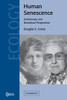
Much research on the biology of senescence is on cell-lines, nematodes or fruit flies, that are only of peripheral relevance to the problems encountered in humans. Human Senescence is a text which reviews the evolutionary biology of human senescence and life span, and the evolutionarily recent development of late-life survival. It examines how human patterns of and variability in growth and development have altered later life survival probabilities and competencies, and how survival during mid-life contributes to senescent dysfunction and alteration. Discussing possibilities of further extending human life span, it gives a better understanding of how humans came to senesce as slowly as we do over our lifespan. Bringing together gerontological, anthropological and biocultural research, it explores human variation in chronic disease, senescence and life span as outcomes of early life adaptation and the success of humankind's sociocultural evolution. It is a benchmark publication for all interested in how and why we age.
The phenomenon related to ageing in human beings is explained in this book. It covers various aspects relating to ageing and discusses the factors associated with it. Renowned experts and researchers...
This work has been selected by scholars as being culturally important, and is part of the knowledge base of civilization as we know it.This work is in the "public domain in the United States of...
Cell senescence is the process whereby cells permanently lose the possibility to proliferate without undergoing cell death, and occurs in a plethora of distinct model organisms. In Cell Senescence:...
This detailed volume covers a wide variety of techniques either developed specially for plant senescence studies or optimized for studying senescing plants. After an introduction to the topic, the...
This book explains the phenomena related to ageing in plants. It covers various aspects relating to ageing and discusses the factors associated with it. It provides elucidative information regarding...