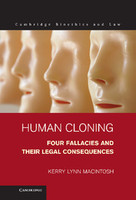
Since Dolly the sheep was born, controversy has swirled around the technology of cloning. We recoil at the prospect of human copies, manufactured men and women, nefarious impersonators and resurrections of the dead. Such reactions have serious legal consequences: lawmakers have banned stem cell research along with the cloning of babies. But what if our minds have been playing tricks on us? What if everything we thought we knew about human cloning is rooted in intuition rather than fact? Human Cloning: Four Fallacies and their Legal Consequences is a rollicking ride through science, psychology and the law. Drawing on sources ranging from science fiction films to the Congressional Record, this book unmasks the role that psychological essentialism has played in bringing about cloning bans. It explains how hidden intuitions have caused conservatives and liberals to act contrary to their own most cherished ideals and values.
This book examines the making of human cloning as an imaginary practice and scientific fact. It explores the controversies surrounding both 'therapeutic cloning' for stem cell research and...
The BiblioGov Project is an effort to expand awareness of the public documents and records of the U.S. Government via print publications. In broadening the public understanding of government and its...
The possibility that human beings may soon be cloned has generated enormous anxiety and fueled a vigorous debate about the ethics of contemporary science. Unfortunately, much of this debate about...