

Trending Bestseller

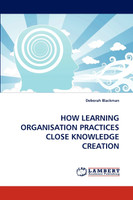
HOW LEARNING ORGANISATION PRACTICES CLOSE KNOWLEDGE CREATION

No reviews yet Write a Review
Paperback / softback
19 January 2011
RRP: $103.24
$101.69
Ships in 3-5 business days
Hurry up! Current stock:
This book discusses whether the pursuit of learning organisation status leads to behaviours that close an organisation to new knowledge. Discussion of three assumptions derived from literature indicates that developing learning processes may not automatically result in useful knowledge. Consideration of learning organisation models, power, potential system closure, knowledge levels and individual preferences suggests that instead the outputs may lead to an organisation effectively reversing the knowledge development cycle, effectively closing the system. Moreover epistemological study indicates that, whilst the models are assumed to be rational in nature, the organisational knowledge is constructed. This mismatch, plus a lack of challenge, is shown to undermine an organisation's ability to recognise or use its knowledge. Four implications are identified: that idea generation becomes less important than idea recognition and use; that knowledge recognition becomes severely limited; that the presence of putative knowledge prevents transformation and that developing learning organisation activities inhibits change.

You Can Find This Book In

    Book Details
    ISBN-13
    9783843394918
    Author
    Deborah Blackman
    Publisher
    KS OmniScriptum Publishing
    Published
    19 January 2011
    Format
    Paperback / softback

    This product hasn't received any reviews yet. Be the first to review this product!

    RRP: $103.24
    $101.69
    Ships in 3-5 business days
    Hurry up! Current stock:

    HOW LEARNING ORGANISATION PRACTICES CLOSE KNOWLEDGE CREATION

    RRP: $103.24
    $101.69

    Description

    This book discusses whether the pursuit of learning organisation status leads to behaviours that close an organisation to new knowledge. Discussion of three assumptions derived from literature indicates that developing learning processes may not automatically result in useful knowledge. Consideration of learning organisation models, power, potential system closure, knowledge levels and individual preferences suggests that instead the outputs may lead to an organisation effectively reversing the knowledge development cycle, effectively closing the system. Moreover epistemological study indicates that, whilst the models are assumed to be rational in nature, the organisational knowledge is constructed. This mismatch, plus a lack of challenge, is shown to undermine an organisation's ability to recognise or use its knowledge. Four implications are identified: that idea generation becomes less important than idea recognition and use; that knowledge recognition becomes severely limited; that the presence of putative knowledge prevents transformation and that developing learning organisation activities inhibits change.

    You Can Find This Book In

      This Book Is Categorised As