The advent of the high-speed computer with its enormous storage capabilities enabled statisticians as well as researchers from the different topics of life sciences to apply mul tivariate statistical procedures to large data sets to explore their structures. More and more, methods of graphical representation and data analysis are used for investigations. These methods belong to a topic of growing popUlarity, known as "exploratory data analysis" or EDA. In many applications, there is reason to believe that a set of objects can be clus tered into subgroups that differ in meaningful ways. Extensive data sets, for example, are stored in clinical cancer registers. In large data sets like these, nobody would ex pect the objects to be homogeneous. The most commonly used terms for the class of procedures that seek to separate the component data into groups are "cluster analysis" or "numerical taxonomy". The origins of cluster analysis can be found in biology and anthropology at the beginning of the century. The first systematic investigations in cluster analysis are those of K. Pearson in 1894. The search for classifications or ty pologies of objects or persons, however, is indigenous not only to biology but to a wide variety of disciplines. Thus, in recent years, a growing interest in classification and related areas has taken place. Today, we see applications of cluster analysis not only to. biology but also to such diverse areas as psychology, regional analysis, marketing research, chemistry, archaeology and medicine.
The advent of the high-speed computer with its enormous storage capabilities enabled statisticians as well as researchers from the different topics of life sciences to apply mul tivariate statistical procedures to large data sets to explore their structures. More and more, methods of graphical representation and data analysis are used for investigations. These methods belong to a topic of growing popUlarity, known as "exploratory data analysis" or EDA. In many applications, there is reason to believe that a set of objects can be clus tered into subgroups that differ in meaningful ways. Extensive data sets, for example, are stored in clinical cancer registers. In large data sets like these, nobody would ex pect the objects to be homogeneous. The most commonly used terms for the class of procedures that seek to separate the component data into groups are "cluster analysis" or "numerical taxonomy". The origins of cluster analysis can be found in biology and anthropology at the beginning of the century. The first systematic investigations in cluster analysis are those of K. Pearson in 1894. The search for classifications or ty pologies of objects or persons, however, is indigenous not only to biology but to a wide variety of disciplines. Thus, in recent years, a growing interest in classification and related areas has taken place. Today, we see applications of cluster analysis not only to. biology but also to such diverse areas as psychology, regional analysis, marketing research, chemistry, archaeology and medicine.
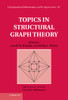
This volume comprises 17 contributions that present advanced topics in graph domination, featuring open problems, modern techniques, and recent results. The book is divided into 3 parts...
Complex databases can be understood well with visual representation. A graph is a very intuitive and rational structure to visually represent such databases. Graph Data Model (GDM) proposed by the...
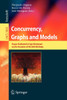
This volume contains the 43 papers written by close collaboratorsand friends of UgoMontanariincelebrationofhis65thbirthday.Insomesense,thevolumeisa re?ection, with gratitude and admiration, on Ugo's...
Discover your next great read at BookLoop, Australiand online bookstore offering a vast selection of titles across various genres and interests. Whether you're curious about what's trending or searching for graphic novels that captivate, thrilling crime and mystery fiction, or exhilarating action and adventure stories, our curated collections have something for every reader. Delve into imaginative fantasy worlds or explore the realms of science fiction that challenge the boundaries of reality. Fans of contemporary narratives will find compelling stories in our contemporary fiction section. Embark on epic journeys with our fantasy and science fiction titles,
Shop Trending Books and New Releases
Explore our new releases for the most recent additions in romance books, fantasy books, graphic novels, crime and mystery books, science fiction books as well as biographies, cookbooks, self help books, tarot cards, fortunetelling and much more. With titles covering current trends, booktok and bookstagram recommendations, and emerging authors, BookLoop remains your go-to local australian bookstore for buying books online across all book genres.
Shop Best Books By Collection
Stay updated with the literary world by browsing our trending books, featuring the latest bestsellers and critically acclaimed works. Explore titles from popular brands like Minecraft, Pokemon, Star Wars, Bluey, Lonely Planet, ABIA award winners, Peppa Pig, and our specialised collection of ADHD books. At BookLoop, we are committed to providing a diverse and enriching reading experience for all.
Sign In
your cart
Your cart is empty
Menu
Search
PRE-SALES
If you have any questions before making a purchase chat with our online operators to get more information.