Trending Bestseller

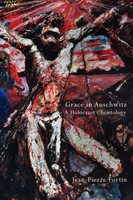
Grace in Auschwitz

Fortin, Jean Pierre

No reviews yet Write a Review
Hardback
1 September 2016
315 Pages
$106.00
Ships in 4-6 business days
Hurry up! Current stock:
The postmodern human condition and relationship to God were forged in response to Auschwitz. Christian theology must now address the challenge posed by the Shoah. Grace in Auschwitz offers a constructive theology of grace that enables twenty-first-century Westerners to relate meaningfully to the Christian tradition in the wake of the Holocaust and unprecedented evil. Through narrative theological testimonial history, the first part articulates the human condition and relationship to God experienced by concentration camp inmates. The second part draws from the lives and works of Simone Well, Dorothee Solle, Dietrich Bonhoeffer, Alfred Delp, Hans Urs von Balthasar, and Sergei Bulgakov to propose and apply a coherent kenotic model enabling the transposition of the Christian doctrine of grace into categories strongly correlating with the experience of Auschwitz survivors. This model centers on the vulnerable Jesus Christ, a God who takes on the burden of the human condition and freely suffers alongside and for human beings. In and through the person ofJesus, God is made present and active in the midst of spiritual desolation and destitution, providing humanity and solace to others.

This product hasn't received any reviews yet. Be the first to review this product!

$106.00
Ships in 4-6 business days
Hurry up! Current stock:

Grace in Auschwitz

$106.00

Description

The postmodern human condition and relationship to God were forged in response to Auschwitz. Christian theology must now address the challenge posed by the Shoah. Grace in Auschwitz offers a constructive theology of grace that enables twenty-first-century Westerners to relate meaningfully to the Christian tradition in the wake of the Holocaust and unprecedented evil. Through narrative theological testimonial history, the first part articulates the human condition and relationship to God experienced by concentration camp inmates. The second part draws from the lives and works of Simone Well, Dorothee Solle, Dietrich Bonhoeffer, Alfred Delp, Hans Urs von Balthasar, and Sergei Bulgakov to propose and apply a coherent kenotic model enabling the transposition of the Christian doctrine of grace into categories strongly correlating with the experience of Auschwitz survivors. This model centers on the vulnerable Jesus Christ, a God who takes on the burden of the human condition and freely suffers alongside and for human beings. In and through the person ofJesus, God is made present and active in the midst of spiritual desolation and destitution, providing humanity and solace to others.
Customers Also Viewed