


Trending Bestseller
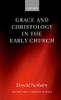
Grace and Christology in the Early Church
How did the early Church understand the relation between grace, salvation, and the person of Christ? Donald Fairbairn's persuasive study shows that, despite intense theological controversy, there was a very strong consensus in the fifth century about what salvation was and who Christ needed to be in order to save people.
Paperback / softback
30-April-2011
RRP:
$104.95
$78.00
Ships in 3-5 business days
Grace and Christology in the Early Church
RRP:
$104.95
$78.00
Description
Was there a genuine theological consensus about Christ in the early Church? Donald Fairbairn's persuasive study uses the concept of grace to clarify this question. There were two sharply divergent understandings of grace and christology. One understanding, characteristic of Theodore and Nestorius, saw grace as God's gift of co-operation to Christians and Christ as the uniquely graced man. The other understanding, characteristic of Cyril of Alexandria and John
Cassian, saw grace as God the Word's personal descent to the human sphere so as to give himself to humanity. Dealing with, among others, John Chrysostom, John of Antioch, and Leo the Great, Fairbairn
suggests that these two understandings were by no means equally represented in the fifth century: Cyril's view was in fact the consensus of the early Church.
You May Like


The Song of Songs and Christology in the Early Church, 381 - 451
How was the scriptural imagery used in the Song of Songs to speak of the Bridegroom and the Bride? Mark W. Elliott presents a range of interpretations paying attention to the context of the...
$52.00

Christology of the Oriental Orthodox Churches
The book offers to the reader a deep and ample knowledge about the theological tradition of the Oriental Orthodox Churches in general and of the Armenian Apostolic Church in particular. Since this...
$166.00