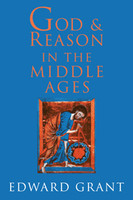
Between 1100 and 1600, the emphasis on reason in the learning and intellectual life of Western Europe became more pervasive and widespread than ever before in the history of human civilization. Of crucial significance was the invention of the university around 1200, within which reason was institutionalized and where it became a deeply embedded, permanent feature of Western thought and culture. It is therefore appropriate to speak of an Age of Reason in the Middle Ages, and to view it as a forerunner and herald of the Age of Reason that was to come in the seventeenth century. The object of this study is twofold: to describe how reason was manifested in the curriculum of medieval universities, especially in the subjects of logic, natural philosophy and theology; and to explain how the Middle Ages acquired an undeserved reputation as an age of superstition, barbarism, and unreason.
In this companion volume to Deity and Domination, David Nicholls broadens his examination of the relationship between religion and politics. Focusing on the images and concepts of God and the state...
In God as Reason: Essays in Philosophical Theology, Vittorio Hoesle presents a systematic exploration of the relation between theology and philosophy. In examining the problems and historical...
Modern Hellenismos is a religious movement that reconstructs the ancient Greek religion in a modern context. The practice uses a method that adapts the old with the new, using the best available...