
Trending Bestseller

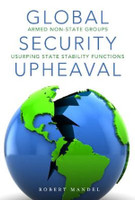
Global Security Upheaval

No reviews yet Write a Review
Paperback / softback
304 Pages
$70.21
Ships in 3-5 business days
Hurry up! Current stock:

This book calls into question the commonly held contentions that central governments are the most important or even the sole sources of a nation's stability, and that subnational and transnational nonstate forces are a major source of global instability.

By assessing recent real-world trends, Mandel reveals that areas exist where it makes little sense to rely on state governments for stability, and that attempts to bolster such governments to promote stability often prove futile. He demonstrates how armed nonstate groups can sometimes provide local stability better than states, and how power-sharing arrangements between states and armed nonstate groups may sometimes be viable. He concludes that these trends in the international setting call for major shifts in our understanding of what constitutes stable governance-proposing that we adopt a fluid ""emergent actor"" approach. And he calls for significant deviation from standard policy responses to the opportunities and dangers posed by nontraditional sources of national authority.

"
Book Details
ISBN-13
9780804784986
Author
Robert Mandel
Format
Paperback / softback
Pages
304

This product hasn't received any reviews yet. Be the first to review this product!

$70.21
Ships in 3-5 business days
Hurry up! Current stock:

Global Security Upheaval

$70.21

Description

This book calls into question the commonly held contentions that central governments are the most important or even the sole sources of a nation's stability, and that subnational and transnational nonstate forces are a major source of global instability.

By assessing recent real-world trends, Mandel reveals that areas exist where it makes little sense to rely on state governments for stability, and that attempts to bolster such governments to promote stability often prove futile. He demonstrates how armed nonstate groups can sometimes provide local stability better than states, and how power-sharing arrangements between states and armed nonstate groups may sometimes be viable. He concludes that these trends in the international setting call for major shifts in our understanding of what constitutes stable governance-proposing that we adopt a fluid ""emergent actor"" approach. And he calls for significant deviation from standard policy responses to the opportunities and dangers posed by nontraditional sources of national authority.

"