
Trending Bestseller

Global Justice & Finance (Paperback)

No reviews yet Write a Review
Paperback / softback
13 June 2022
238 Pages
$72.95
Hurry up! Current stock:
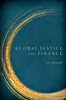
Global Justice and Finance is a work of political theory challenging the tradition of global justice theory that proposes modest reforms to the international institutional order as sufficient for achieving a more just world. The focus is on assumptions about using money to solve problems like severe poverty and ecological damage. The book shows that money is not simply a neutral medium that can be pressed into the service of just any purposes. Rather, it is a function of a complex system of arrangements that are governed by powerful interests within a global order that is controlled by transnational actors able to exploit the capacities of states while escaping any burden to maintain the institutions or economies of those states. The book uncovers a number of paradoxes in global justice thinking, including the paradoxes of benign leverage and of cashless cash, while emphasising more generally on the radical uncertainty of money prices that makes them an unsuitable basis for planning real strategies for justice, sustainability, and peace.
Book Details
ISBN-13
9780192862754
Publisher
Oxford University Press UK
Published
13 June 2022
Format
Paperback / softback
Pages
238

This product hasn't received any reviews yet. Be the first to review this product!

$72.95
Hurry up! Current stock:

Global Justice & Finance (Paperback)

$72.95

Description

Global Justice and Finance is a work of political theory challenging the tradition of global justice theory that proposes modest reforms to the international institutional order as sufficient for achieving a more just world. The focus is on assumptions about using money to solve problems like severe poverty and ecological damage. The book shows that money is not simply a neutral medium that can be pressed into the service of just any purposes. Rather, it is a function of a complex system of arrangements that are governed by powerful interests within a global order that is controlled by transnational actors able to exploit the capacities of states while escaping any burden to maintain the institutions or economies of those states. The book uncovers a number of paradoxes in global justice thinking, including the paradoxes of benign leverage and of cashless cash, while emphasising more generally on the radical uncertainty of money prices that makes them an unsuitable basis for planning real strategies for justice, sustainability, and peace.