Are we justified in breeding wheat for tolerance to acid soils in southern New South Wales?.- Comparison of techniques for determining the effect of aluminium on the growth of, and the inheritance of aluminium tolerance in wheat.- Breeding the perennial pasture grass Phalaris aquatica for acid soils.- Screening perennial rye-grass from New Zealand for aluminium tolerance.- Somaclonal variation in plant adaptation to acid soil in the tropical forage legume Stylosanthes guianensis.- Tolerance to manganese toxicity among cultivars of lucerne (Medicago sativa L.).- Response to soil aluminium of two white clover (Trifolium repens L.) genotypes.- Differences in calcium efficiency between cowpea (Vigna unguiculata (L.) Walp.) cultivars.- Wheat growth responses of cultivars to H+ concentration.- Effect of aluminium on the growth of 34 plant species: A summary of results obtained in low ionic strength solution culture.- Callose formation as parameter for assessing genotypical plant tolerance of aluminium and manganese.- Interspecific differences in aluminium tolerance in relation to root cation-exchange capacity.- Preliminary results from a microscopic examination on the effects of aluminium on the root tips of wheat.- Aluminium toxicity: Towards an understanding of how plant roots react to the physical environment.- Increasing salinity tolerance of grain crops: Is it worthwhile?.- Arguments for the use of physiological criteria for improving the salt tolerance in crops.- Why does in vitro cell selection not improve the salt tolerance of plants?.- Variation and inheritance of sodium transport in rice.- Genetics and physiology of enhanced K/Na discrimination.- Association between genes controlling flowering time and shoot sodium accumulation in the Triticeae.- The inheritance of salt exclusion in woody perennial fruit species.- Variation in growth and ion accumulation between two selected populations of Trifolium repens L. differing in salt tolerance.- The role of ion channels in plant nutrition and prospects for their genetic manipulation.- Effect of salt stress on plant gene expression: A review.- Protein synthesis in halophytes: The influence of potassium, sodium and magnesium in vitro.- Nutrient efficiency - what do we really mean?.- A review of phosphorus efficiency in wheat.- The involvement of mycorrhizas in assessment of genetically dependent efficiency of nutrient uptake and use.- Screening maize inbred lines for tolerance to low-P stress condition.- Inheritance studies of low-phosphorus tolerance in maize (Zea mays L.), grown in a sand-alumina culture medium.- Inheritance of phosphorus response in white clover (Trifolium repens L.).- Heritability of, and relationships between phosphorus and nitrogen concentration in shoot, stolon and root of white clover (Trifolium repens L.).- Polymorphism and physiology of arsenate tolerance in Holcus lanatus L. from an uncontaminated site.- The role of piscidic acid secreted by pigeonpea roots grown in an Alfison with low-P fertility.- Effect of mineral nutrients and combined nitrogen on the growth and nitrogen fixation of Azolla-Anabaena symbiosis.- Can maize cultivars with low mineral nutrient concentrations in the grains help to reduce the need for fertilizers in third world countries?.- A physiological basis for genetic improvement to nitrogen harvest index in wheat.- Post-transcriptional control of the expression of a plant gene by an environmental factor: Sulphur regulation of the expression of the Pea Albumin 1 gene.- Strategies in population development for the improvement of Fe efficiency in soybean.- Genetics of tolerance to iron chlorosis in rice.- Genotypic variation among Indian graminaceous species with respect to phytosiderophore secretion.- Requirement and response of crop cultivars to micronutrients in India - a review.- Selecting zinc-efficient cereal genotypes for soils of low zinc status.- Combining ability of the response to boron deficiency in wheat.- Yield evaluati...
Are we justified in breeding wheat for tolerance to acid soils in southern New South Wales?.- Comparison of techniques for determining the effect of aluminium on the growth of, and the inheritance of aluminium tolerance in wheat.- Breeding the perennial pasture grass Phalaris aquatica for acid soils.- Screening perennial rye-grass from New Zealand for aluminium tolerance.- Somaclonal variation in plant adaptation to acid soil in the tropical forage legume Stylosanthes guianensis.- Tolerance to manganese toxicity among cultivars of lucerne (Medicago sativa L.).- Response to soil aluminium of two white clover (Trifolium repens L.) genotypes.- Differences in calcium efficiency between cowpea (Vigna unguiculata (L.) Walp.) cultivars.- Wheat growth responses of cultivars to H+ concentration.- Effect of aluminium on the growth of 34 plant species: A summary of results obtained in low ionic strength solution culture.- Callose formation as parameter for assessing genotypical plant tolerance of aluminium and manganese.- Interspecific differences in aluminium tolerance in relation to root cation-exchange capacity.- Preliminary results from a microscopic examination on the effects of aluminium on the root tips of wheat.- Aluminium toxicity: Towards an understanding of how plant roots react to the physical environment.- Increasing salinity tolerance of grain crops: Is it worthwhile?.- Arguments for the use of physiological criteria for improving the salt tolerance in crops.- Why does in vitro cell selection not improve the salt tolerance of plants?.- Variation and inheritance of sodium transport in rice.- Genetics and physiology of enhanced K/Na discrimination.- Association between genes controlling flowering time and shoot sodium accumulation in the Triticeae.- The inheritance of salt exclusion in woody perennial fruit species.- Variation in growth and ion accumulation between two selected populations of Trifolium repens L. differing in salt tolerance.- The role of ion channels in plant nutrition and prospects for their genetic manipulation.- Effect of salt stress on plant gene expression: A review.- Protein synthesis in halophytes: The influence of potassium, sodium and magnesium in vitro.- Nutrient efficiency - what do we really mean?.- A review of phosphorus efficiency in wheat.- The involvement of mycorrhizas in assessment of genetically dependent efficiency of nutrient uptake and use.- Screening maize inbred lines for tolerance to low-P stress condition.- Inheritance studies of low-phosphorus tolerance in maize (Zea mays L.), grown in a sand-alumina culture medium.- Inheritance of phosphorus response in white clover (Trifolium repens L.).- Heritability of, and relationships between phosphorus and nitrogen concentration in shoot, stolon and root of white clover (Trifolium repens L.).- Polymorphism and physiology of arsenate tolerance in Holcus lanatus L. from an uncontaminated site.- The role of piscidic acid secreted by pigeonpea roots grown in an Alfison with low-P fertility.- Effect of mineral nutrients and combined nitrogen on the growth and nitrogen fixation of Azolla-Anabaena symbiosis.- Can maize cultivars with low mineral nutrient concentrations in the grains help to reduce the need for fertilizers in third world countries?.- A physiological basis for genetic improvement to nitrogen harvest index in wheat.- Post-transcriptional control of the expression of a plant gene by an environmental factor: Sulphur regulation of the expression of the Pea Albumin 1 gene.- Strategies in population development for the improvement of Fe efficiency in soybean.- Genetics of tolerance to iron chlorosis in rice.- Genotypic variation among Indian graminaceous species with respect to phytosiderophore secretion.- Requirement and response of crop cultivars to micronutrients in India - a review.- Selecting zinc-efficient cereal genotypes for soils of low zinc status.- Combining ability of the response to boron deficiency in wheat.- Yield evaluati...
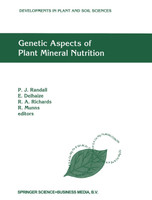
The idea of addressing the problem of the genetic specificity of mineral nutrition at an international level arose four years ago in a proposal for this topic to be included in the program of the II...
This textbook aims to describe the role of minerals in plant life cycle; how these nutrients are absorbed, distributed, stored; what functions each mineral plays and the disorders that their excess...
Discover your next great read at BookLoop, Australiand online bookstore offering a vast selection of titles across various genres and interests. Whether you're curious about what's trending or searching for graphic novels that captivate, thrilling crime and mystery fiction, or exhilarating action and adventure stories, our curated collections have something for every reader. Delve into imaginative fantasy worlds or explore the realms of science fiction that challenge the boundaries of reality. Fans of contemporary narratives will find compelling stories in our contemporary fiction section. Embark on epic journeys with our fantasy and science fiction titles,
Shop Trending Books and New Releases
Explore our new releases for the most recent additions in romance books, fantasy books, graphic novels, crime and mystery books, science fiction books as well as biographies, cookbooks, self help books, tarot cards, fortunetelling and much more. With titles covering current trends, booktok and bookstagram recommendations, and emerging authors, BookLoop remains your go-to local australian bookstore for buying books online across all book genres.
Shop Best Books By Collection
Stay updated with the literary world by browsing our trending books, featuring the latest bestsellers and critically acclaimed works. Explore titles from popular brands like Minecraft, Pokemon, Star Wars, Bluey, Lonely Planet, ABIA award winners, Peppa Pig, and our specialised collection of ADHD books. At BookLoop, we are committed to providing a diverse and enriching reading experience for all.
Sign In
your cart
Your cart is empty
Menu
Search
PRE-SALES
If you have any questions before making a purchase chat with our online operators to get more information.