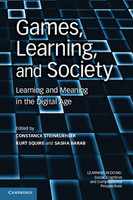
This volume is the first reader on video games and learning of its kind. Covering game design, game culture and games as twenty-first-century pedagogy, it demonstrates the depth and breadth of scholarship on games and learning to date. The chapters represent some of the most influential thinkers, designers and writers in the emerging field of games and learning - including James Paul Gee, Soren Johnson, Eric Klopfer, Colleen Macklin, Thomas Malaby, Bonnie Nardi, David Sirlin and others. Together, their work functions both as an excellent introduction to the field of games and learning and as a powerful argument for the use of games in formal and informal learning environments in a digital age.
The Japan Association of Simulation & Gaming (JASAG) and the Science Council of Japan (SCJ) hosted ISAGA 2003, the 34th annual conference of the International Simulation and Gaming Association...
The progress of society can only happen through interpersonal cooperation, because only cooperation can bring about mutual benefit, thus bringing happiness to each person. This should be our...
The 'learning society' is not a new idea, although its popularity has grown in recent years with the suggestion that lifelong learning is a condition for economic competitiveness in a global economy,...
The book presents a critical evaluation of current approaches related to the use of digital games in education. The author identifies two competing paradigms: that of games-to-teach and...
This book provides an overview of the design and development of learning games using examples from those created by the authors over last decade. It provides lessons learned about processes,...