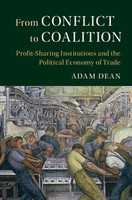


International trade often inspires intense conflict between workers and their employers. In this book, Adam Dean studies the conditions under which labor and capital collaborate in support of the same trade policies. Dean argues that capital-labor agreement on trade policy depends on the presence of 'profit-sharing institutions'. He tests this theory through case studies from the United States, Britain, and Argentina in the late-nineteenth and early-twentieth centuries; they offer a revisionist history placing class conflict at the center of the political economy of trade. Analysis of data from more than one hundred countries from 1986 to 2002 demonstrates that the field's conventional wisdom systematically exaggerates the benefits that workers receive from trade policy reforms. From Conflict to Coalition boldly explains why labor is neither an automatic beneficiary nor an automatic ally of capital when it comes to trade policy and distributional conflict.
This study proposes moving from the current Department of Defense, (DOD) Ad Hoc approach to an established framework using five key factors as a basis for executing military coalition operations...
Through a rhetorical analysis, this book explores how the parties in a coalition government create a united public front while preserving their distinct identities. After proposing an original...
In 2010, the Conservative Party returned to office after over a decade of largely ineffective opposition to New Labour. This book explains why it took so long to recover, and why the party was unable...
This work has been selected by scholars as being culturally important, and is part of the knowledge base of civilization as we know it. This work was reproduced from the original artifact, and...