Five years have now passed since the first symposium on frankiae was held at Harvard Forest, Petersham, Massachusetts, USA and the inauguration of the term actinorhiza. Many advances have been made during these five years in our understanding of the actinorhizal symbioses. Evidence for this was provided by the papers presented at the Wageningen Workshop on Frankia symbioses, held in Wageningen at the Department of Microbiology of the Agricultural University. Most of these papers are now published in this volume of PLANT AND SOIL. We kindly acknowledge the assistance of Anton Houwers, editor of the journal, in planning, reviewing and publishing these studies. Although the papers presented at Wageningen described the active research areas, they also illuminated those aspects of these symbioses which remain beyond our understanding. Primary among the areas of our ignorance is the concept of species within the bacterial symbiont, Frankia. At present groupings of bacterial strains are based on cell chemistry, physiology, serology, DNA homology and symbiotic capa bilities (cross-inoculation). When these classification schemes are merged no clear species framework is obtained. Undoubtedly part of the difficulty is due to a lack of strains for analysis. Currently bacterial strains from only half of the actinorhizal symbioses known to exist, have been isolated and studied in pure culture. We must postpone there fore any comprehensive taxonomic classification until a larger majority of the symbioses are represented. Another research area wherein our understanding is insufficient is host-symbiont interaction.
Five years have now passed since the first symposium on frankiae was held at Harvard Forest, Petersham, Massachusetts, USA and the inauguration of the term actinorhiza. Many advances have been made during these five years in our understanding of the actinorhizal symbioses. Evidence for this was provided by the papers presented at the Wageningen Workshop on Frankia symbioses, held in Wageningen at the Department of Microbiology of the Agricultural University. Most of these papers are now published in this volume of PLANT AND SOIL. We kindly acknowledge the assistance of Anton Houwers, editor of the journal, in planning, reviewing and publishing these studies. Although the papers presented at Wageningen described the active research areas, they also illuminated those aspects of these symbioses which remain beyond our understanding. Primary among the areas of our ignorance is the concept of species within the bacterial symbiont, Frankia. At present groupings of bacterial strains are based on cell chemistry, physiology, serology, DNA homology and symbiotic capa bilities (cross-inoculation). When these classification schemes are merged no clear species framework is obtained. Undoubtedly part of the difficulty is due to a lack of strains for analysis. Currently bacterial strains from only half of the actinorhizal symbioses known to exist, have been isolated and studied in pure culture. We must postpone there fore any comprehensive taxonomic classification until a larger majority of the symbioses are represented. Another research area wherein our understanding is insufficient is host-symbiont interaction.
The 12th meeting on Frankia and Actinorhizal Plants that took place in Carry-le-Rouet, France in June 2001 was the opportunity for scientists to communicate about latest developments on this ...
When one picks up a multiauthored book in a series like this, one wonders what will be distinctive about its contents. one wonders about the "Concept of Symbiosis. " does it have the same meaning for...
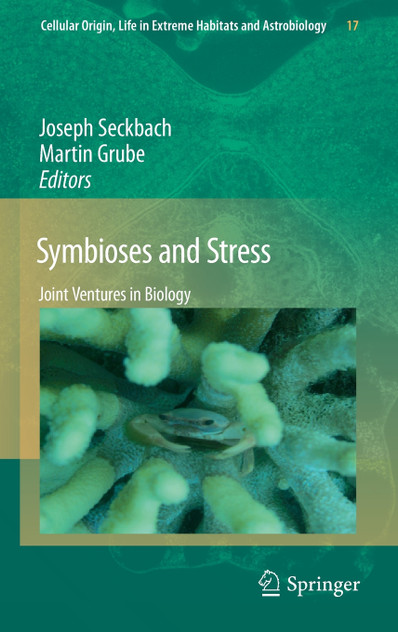
Owing to their importance as primary producers of energy and nutrition, algae and cyanobacteria are found as symbiotic partners across diverse lineages of prokaryotic and eukaryotic kingdoms.Algal...
Komplementaritäten bedingen und ergänzen sich gegenseitig, so wie beispielsweise Raum und Zeit. Da auch Symbiosen als gegenseitige Ergänzungen verstanden werden können, ist es naheliegend,...
Discover your next great read at BookLoop, Australiand online bookstore offering a vast selection of titles across various genres and interests. Whether you're curious about what's trending or searching for graphic novels that captivate, thrilling crime and mystery fiction, or exhilarating action and adventure stories, our curated collections have something for every reader. Delve into imaginative fantasy worlds or explore the realms of science fiction that challenge the boundaries of reality. Fans of contemporary narratives will find compelling stories in our contemporary fiction section. Embark on epic journeys with our fantasy and science fiction titles,
Shop Trending Books and New Releases
Explore our new releases for the most recent additions in romance books, fantasy books, graphic novels, crime and mystery books, science fiction books as well as biographies, cookbooks, self help books, tarot cards, fortunetelling and much more. With titles covering current trends, booktok and bookstagram recommendations, and emerging authors, BookLoop remains your go-to local australian bookstore for buying books online across all book genres.
Shop Best Books By Collection
Stay updated with the literary world by browsing our trending books, featuring the latest bestsellers and critically acclaimed works. Explore titles from popular brands like Minecraft, Pokemon, Star Wars, Bluey, Lonely Planet, ABIA award winners, Peppa Pig, and our specialised collection of ADHD books. At BookLoop, we are committed to providing a diverse and enriching reading experience for all.
Sign In
your cart
Your cart is empty
Menu
Search
PRE-SALES
If you have any questions before making a purchase chat with our online operators to get more information.