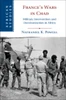
Examining the continuous French military interventions in Chad in the two decades after its independence, this study demonstrates how France's successful counterinsurgency efforts to protect the regime of François Tombalbaye would ultimately weaken the Chadian state and encourage Libya's Muammar Gaddafi to intervene. In covering the subsequent French efforts to counter Libyan ambitions and the rise to power of Hissène Habré, one of postcolonial Africa's most brutal dictators, Nathaniel K. Powell demonstrates that French strategies aiming to prevent the collapse of authoritarian regimes had the opposite effect, exacerbating violent conflicts and foreign interventions in Chad and further afield. Based on extensive archival research to trace the causes, course, and impact of French interventions in Chad, this study offers insights and lessons for current interveners - including France - fighting a 'war on terrorism' in the Sahel whose strategies and impact parallel those of France in the 1960s-1980s.
In 1915, during the second year of the Great War, Kipling made a tour as a journalist to the front of some of the French armed forces. His report of what he had seen of the military activity was...
This work has been selected by scholars as being culturally important, and is part of the knowledge base of civilization as we know it. This work was reproduced from the original artifact, and...
Join Rudyard Kipling as he reports on the battlefields of France during World War I. His vivid descriptions of the war and its impact on soldiers and civilians will leave you breathless. A powerful...
This book, coinciding with the sixtieth anniversary of the Liberation of France, takes a unique approach to the events of 1944, by seeing them as shared experiences which brought ordinary...
This work has been selected by scholars as being culturally important, and is part of the knowledge base of civilization as we know it. This work was reproduced from the original artifact, and...