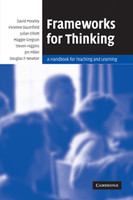
This handbook focuses on the thinking processes necessary for learning. It provides descriptions and evaluations of 42 major frameworks including Bloom's taxonomy, de Bono's lateral and parallel thinking tools, Gardner's theory of multiple intelligences and Paul's model of critical thinking. Unique in its comprehensive coverage and interdisciplinary approach, it offers easy-to-grasp summary tables for each major theorist for speedy reference. The discussion of cognitive, emotional and social aspects of thinking and the nature of classification help the reader locate theories within a broader field of knowledge. Key concepts such as critical thinking, self-regulation and metacognition are examined from a range of perspectives. The handbook offers practical advice in the form of choices and recommendations for the use of frameworks in teaching, learning and assessment. A valuable tool for students needing to understand different ways of thinking it will also be an essential resource for teachers, curriculum developers, researchers and policy-makers.
The Framework gives an in-depth analysis of the framework andfoundations that will cause your house to fall as well as revealto you the only Framework and Foundation that is crucial to success in the...
Dash is a young man who is struggling with his identity. Growing up as Metis in the Canadian West, he faces his share of hardship and uncertainty. To sustain him, he has only his mother's love and...
Around the world the disruptive promises of the infamous dot com bubble of the late nineties and early noughties are finally being realised. The current generation of IT that had Cloud enter everyday...