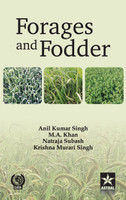
Book entitled "Forages and Fodder: Indian Perspective" contains different aspects viz., production, protection, PGR management, consumption; preservation and socio-economic aspects of forage and fodder crops. The present book is one of the latest and updated manuscripts related to forage and fodder in Indian context. Forage includes all plant species directly or indirectly consumed by animals and cultivated forage crops occupy about 5.0 per cent of the total cultivated area of India. The animal fodder consists of several plants species which are used to feed the cattle either raw (green and cut fodder) or after minor processing (such as silage) while pastures are grassland, usually with improved species, carefully managed with inputs such as irrigation and manures for grazing of livestock. The National Commission on Agriculture (1976) recommended that a minimum 10 per cent of the arable area in the country (about 16.5 million ha) should be under improved forage crops to meet the green forage needs of the ever growing livestock population. At the same time, plant genetic resource (PGR), which carries germplasm for present and future needs, can be utilized for producing varieties having resistance to biotic and abiotic stress as well as for its quality enrichments. Weed growth should not be overlooked as it hampers yield, lowers forage quality, increases the incidence of disease and insect problems, causes premature stand loss, and creates harvesting problems. Some weeds are unpalatable and may be poisonous for livestock. Updated information on insect pest problem is well documented in the book. It is established fact that insect and pests cause yield loss, both in quantitative and qualitative terms, and their effects depend on many factors like, the level of infestation, crop variety, agronomic practices and other related factors. Insect pests induced losses are not only in term of green or dry fodder yield but also on quality factors which affect the re-growth period and canopy structure. Among the other constraints, the diseases have always been a major limiting factor for fodder cultivation. Fertilizer management, organic farming and climatic conditions required for different fodder and forage crops are very well illustrated in the present volume. Women play a key role as seed selectors and in seedling production and their knowledge on seeds and seed storage contributes to viability of agricultural diversity and production. Women also play an important role in livestock management which includes, care of animals, grazing and fodder collection, cleaning of animal sheds, processing milk and livestock products. Despite their considerable involvement and contribution, women's role in livestock production has been underestimated, undervalued and widely ignored. The book also covers areas like marketing of forage and fodders and all together contains 32 chapters on various issues of forage and fodder production and management.
Book entitled "Forages and Fodder: Indian Perspective" contains different aspects viz., production, protection, PGR management, consumption; preservation and socio-economic aspects of forage and fodder crops. The present book is one of the latest and updated manuscripts related to forage and fodder in Indian context. Forage includes all plant species directly or indirectly consumed by animals and cultivated forage crops occupy about 5.0 per cent of the total cultivated area of India. The animal fodder consists of several plants species which are used to feed the cattle either raw (green and cut fodder) or after minor processing (such as silage) while pastures are grassland, usually with improved species, carefully managed with inputs such as irrigation and manures for grazing of livestock. The National Commission on Agriculture (1976) recommended that a minimum 10 per cent of the arable area in the country (about 16.5 million ha) should be under improved forage crops to meet the green forage needs of the ever growing livestock population. At the same time, plant genetic resource (PGR), which carries germplasm for present and future needs, can be utilized for producing varieties having resistance to biotic and abiotic stress as well as for its quality enrichments. Weed growth should not be overlooked as it hampers yield, lowers forage quality, increases the incidence of disease and insect problems, causes premature stand loss, and creates harvesting problems. Some weeds are unpalatable and may be poisonous for livestock. Updated information on insect pest problem is well documented in the book. It is established fact that insect and pests cause yield loss, both in quantitative and qualitative terms, and their effects depend on many factors like, the level of infestation, crop variety, agronomic practices and other related factors. Insect pests induced losses are not only in term of green or dry fodder yield but also on quality factors which affect the re-growth period and canopy structure. Among the other constraints, the diseases have always been a major limiting factor for fodder cultivation. Fertilizer management, organic farming and climatic conditions required for different fodder and forage crops are very well illustrated in the present volume. Women play a key role as seed selectors and in seedling production and their knowledge on seeds and seed storage contributes to viability of agricultural diversity and production. Women also play an important role in livestock management which includes, care of animals, grazing and fodder collection, cleaning of animal sheds, processing milk and livestock products. Despite their considerable involvement and contribution, women's role in livestock production has been underestimated, undervalued and widely ignored. The book also covers areas like marketing of forage and fodders and all together contains 32 chapters on various issues of forage and fodder production and management.
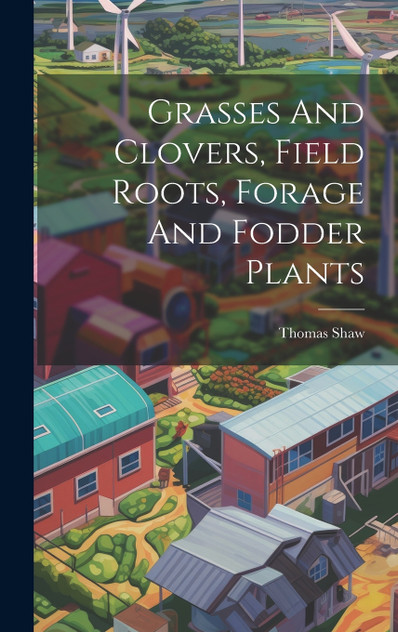
This informative guide to field crops, written by noted agronomist Thomas Shaw, offers valuable insights into the cultivation and management of grasses, clovers, and other important forage and fodder...
Animal lovers who feed meat to other animals are faced with a paradox: perhaps fewer animals would be harmed if they stopped feeding the ones they love. Animal diets do not raise problems merely for...
Discover your next great read at BookLoop, Australiand online bookstore offering a vast selection of titles across various genres and interests. Whether you're curious about what's trending or searching for graphic novels that captivate, thrilling crime and mystery fiction, or exhilarating action and adventure stories, our curated collections have something for every reader. Delve into imaginative fantasy worlds or explore the realms of science fiction that challenge the boundaries of reality. Fans of contemporary narratives will find compelling stories in our contemporary fiction section. Embark on epic journeys with our fantasy and science fiction titles,
Shop Trending Books and New Releases
Explore our new releases for the most recent additions in romance books, fantasy books, graphic novels, crime and mystery books, science fiction books as well as biographies, cookbooks, self help books, tarot cards, fortunetelling and much more. With titles covering current trends, booktok and bookstagram recommendations, and emerging authors, BookLoop remains your go-to local australian bookstore for buying books online across all book genres.
Shop Best Books By Collection
Stay updated with the literary world by browsing our trending books, featuring the latest bestsellers and critically acclaimed works. Explore titles from popular brands like Minecraft, Pokemon, Star Wars, Bluey, Lonely Planet, ABIA award winners, Peppa Pig, and our specialised collection of ADHD books. At BookLoop, we are committed to providing a diverse and enriching reading experience for all.
Sign In
your cart
Your cart is empty
Menu
Search
PRE-SALES
If you have any questions before making a purchase chat with our online operators to get more information.