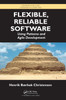
A developer's knowledge of a computing system's requirements is necessarily imperfect because organizations change. Many requirements lie in the future and are unknowable at the time the system is designed and built. To avoid burdensome maintenance costs developers must therefore rely on a system's ability to change gracefully-its flexibility. Flexible Software Design: Systems Development for Changing Requirements demonstrates the design principles and techniques that enable the design of software that empowers business staff to make functional changes to their systems with little or no professional IT intervention. The book concentrates on the design aspects of system development, the area with the most flexibility leverage. Divided into four parts, the text begins by introducing the fundamental concepts of flexibility, explaining the reality of imperfect knowledge and how development participants must change their thinking to implement flexible software. The second part covers design guidelines, stable identifiers, stable information structures, the Generic Entity Cloud concept, and regulatory mechanisms that give business staff control over system modifications. Part three relates strategic information systems planning to flexible systems. It examines the elicitation of requirements and the relevance of agile methods in a flexible systems environment. It also discusses practical aspects of stable identifier design and compares the testing of traditional and flexible software. In part four, the book concludes with details of the flexible UniverSIS system and an explanation of the applications and extensions of the Generic Entity Cloud tools. The combination of smart design and smart work offered in Flexible Software Design can materially benefit your organization by radically reducing the systems maintenance burden.
A developer's knowledge of a computing system's requirements is necessarily imperfect because organizations change. Many requirements lie in the future and are unknowable at the time the system is designed and built. To avoid burdensome maintenance costs developers must therefore rely on a system's ability to change gracefully-its flexibility. Flexible Software Design: Systems Development for Changing Requirements demonstrates the design principles and techniques that enable the design of software that empowers business staff to make functional changes to their systems with little or no professional IT intervention. The book concentrates on the design aspects of system development, the area with the most flexibility leverage. Divided into four parts, the text begins by introducing the fundamental concepts of flexibility, explaining the reality of imperfect knowledge and how development participants must change their thinking to implement flexible software. The second part covers design guidelines, stable identifiers, stable information structures, the Generic Entity Cloud concept, and regulatory mechanisms that give business staff control over system modifications. Part three relates strategic information systems planning to flexible systems. It examines the elicitation of requirements and the relevance of agile methods in a flexible systems environment. It also discusses practical aspects of stable identifier design and compares the testing of traditional and flexible software. In part four, the book concludes with details of the flexible UniverSIS system and an explanation of the applications and extensions of the Generic Entity Cloud tools. The combination of smart design and smart work offered in Flexible Software Design can materially benefit your organization by radically reducing the systems maintenance burden.
This book questions flexibility as a design approach by providing a longitudinal analysis of an innovative architectural experiment called the School Construction Systems Development (SCSD) project...
Discover your next great read at BookLoop, Australiand online bookstore offering a vast selection of titles across various genres and interests. Whether you're curious about what's trending or searching for graphic novels that captivate, thrilling crime and mystery fiction, or exhilarating action and adventure stories, our curated collections have something for every reader. Delve into imaginative fantasy worlds or explore the realms of science fiction that challenge the boundaries of reality. Fans of contemporary narratives will find compelling stories in our contemporary fiction section. Embark on epic journeys with our fantasy and science fiction titles,
Shop Trending Books and New Releases
Explore our new releases for the most recent additions in romance books, fantasy books, graphic novels, crime and mystery books, science fiction books as well as biographies, cookbooks, self help books, tarot cards, fortunetelling and much more. With titles covering current trends, booktok and bookstagram recommendations, and emerging authors, BookLoop remains your go-to local australian bookstore for buying books online across all book genres.
Shop Best Books By Collection
Stay updated with the literary world by browsing our trending books, featuring the latest bestsellers and critically acclaimed works. Explore titles from popular brands like Minecraft, Pokemon, Star Wars, Bluey, Lonely Planet, ABIA award winners, Peppa Pig, and our specialised collection of ADHD books. At BookLoop, we are committed to providing a diverse and enriching reading experience for all.
Sign In
your cart
Your cart is empty
Menu
Search
PRE-SALES
If you have any questions before making a purchase chat with our online operators to get more information.