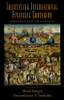
Offers an account of the financial crises that rocked East Asia and other parts of the world, beginning with the collapse of the Thai baht in 1997. This book argues that East Asia's opening to the free flow of capital was pushed by advocates, official and private, in the global economy's U.S.-led developed center.
This book provides a sweeping, up-to-date, and boldly critical account of the financial crises that rocked East Asia and other parts of the world beginning with the collapse of the Thai baht in 1997. Retracing the story of Asia's "Crisis Five"--Indonesia, Malaysia, South Korea, the Philippines, and Thailand--Padma Desai argues that the region's imprudently fast-paced opening to the free flow of capital was pushed by determined advocates, official and private, in the global economy's U.S.-led developed center. Turmoil ensued in these peripheral economies, the Russian ruble faltered, and Brazil was eventually hit. The inequitable center-periphery relationship also extended to the policy measures that the crisis-swept economies implemented under International Monetary Fund bailouts, which intensified the downturns induced by the panic-driven outflows of short-term capital. Financial Crisis, Contagion, and Containment examines crisis origin and resolution in a comparative perspective by combing empirical evidence from the most robust economies to the least. Why is the U.S. relatively successful at weathering economic ups and downs? Why is Japan stuck in policy paralysis?Why is the European Central Bank unable to achieve both inflation control and stable growth?How can emerging markets avoid turbulence amid free-flowing speculative capital from private lenders of the developed center? Engaging and nontechnical yet deeply insightful, this book appears at a time when the continuing turmoil in Argentina has revived policy debates for avoiding and addressing financial crises in emerging market economies.
This book provides a sweeping, up-to-date, and boldly critical account of the financial crises that rocked East Asia and other parts of the world beginning with the collapse of the Thai baht in 1997. Retracing the story of Asia's "Crisis Five"--Indonesia, Malaysia, South Korea, the Philippines, and Thailand--Padma Desai argues that the region's imprudently fast-paced opening to the free flow of capital was pushed by determined advocates, official and private, in the global economy's U.S.-led developed center. Turmoil ensued in these peripheral economies, the Russian ruble faltered, and Brazil was eventually hit. The inequitable center-periphery relationship also extended to the policy measures that the crisis-swept economies implemented under International Monetary Fund bailouts, which intensified the downturns induced by the panic-driven outflows of short-term capital. Financial Crisis, Contagion, and Containment examines crisis origin and resolution in a comparative perspective by combing empirical evidence from the most robust economies to the least. Why is the U.S. relatively successful at weathering economic ups and downs? Why is Japan stuck in policy paralysis?Why is the European Central Bank unable to achieve both inflation control and stable growth?How can emerging markets avoid turbulence amid free-flowing speculative capital from private lenders of the developed center? Engaging and nontechnical yet deeply insightful, this book appears at a time when the continuing turmoil in Argentina has revived policy debates for avoiding and addressing financial crises in emerging market economies.
Why bother with a book written three quarters of a century ago about the 1930s world economic crisis? Didn't John Kenneth Galbraith publish the definitive work on the subject in 1955? Historians...
No sooner had the Asian crisis broken out in 1997 than the witch-hunt started. With great indignation every Asian economy pointed fingers. They were innocent bystanders. The fundamental reason for...
Financial crises often transmit across geographical borders and different asset classes. Modeling these interactions is empirically challenging, and many of the proposed methods give different...
This book reviews the state-of-the-art of the literature on international financial contagion. The individual contributions bridge the gap between econometric theory and evidence, while the...
Discover your next great read at BookLoop, Australiand online bookstore offering a vast selection of titles across various genres and interests. Whether you're curious about what's trending or searching for graphic novels that captivate, thrilling crime and mystery fiction, or exhilarating action and adventure stories, our curated collections have something for every reader. Delve into imaginative fantasy worlds or explore the realms of science fiction that challenge the boundaries of reality. Fans of contemporary narratives will find compelling stories in our contemporary fiction section. Embark on epic journeys with our fantasy and science fiction titles,
Shop Trending Books and New Releases
Explore our new releases for the most recent additions in romance books, fantasy books, graphic novels, crime and mystery books, science fiction books as well as biographies, cookbooks, self help books, tarot cards, fortunetelling and much more. With titles covering current trends, booktok and bookstagram recommendations, and emerging authors, BookLoop remains your go-to local australian bookstore for buying books online across all book genres.
Shop Best Books By Collection
Stay updated with the literary world by browsing our trending books, featuring the latest bestsellers and critically acclaimed works. Explore titles from popular brands like Minecraft, Pokemon, Star Wars, Bluey, Lonely Planet, ABIA award winners, Peppa Pig, and our specialised collection of ADHD books. At BookLoop, we are committed to providing a diverse and enriching reading experience for all.
Sign In
your cart
Your cart is empty
Menu
Search
PRE-SALES
If you have any questions before making a purchase chat with our online operators to get more information.