1 Preliminary Notions.- 1.1 Introduction.- 1.2 Sufficiency.- 1.3 Complete Sufficient Statistics.- 1.4 Exponential Families of Distributions.- 1.5 Invariance.- 1.6 Maximum Likelihood Estimation.- 1.7 Unbiased Estimation.- 1.8 Least Squares Estimation.- 1.9 Interval Estimation.- Exercises.- 2 Notions in significance testing of hypotheses.- 2.1 Introduction.- 2.2 Test Statistics and Test Variables.- 2.3 Definition of p-Value.- 2.4 Generalized Likelihood Ratio Method.- 2.5 Invariance in Significance Testing.- 2.6 Unbiasedness and Similarity.- 2.7 Interval Estimation and Fixed-Level Testing.- Exercises.- 3 Review of Special Distributions.- 3.1 Poisson and Binomial Distributions.- 3.2 Point Estimation and Interval Estimation.- 3.3 Significance Testing of Parameters.- 3.4 Bayesian Inference.- 3.5 The Normal Distribution.- 3.6 Inferences About the Mean.- 3.7 Inferences About the Variance.- 3.8 Quantiles of a Normal Distribution.- 3.9 Conjugate Prior and Posterior Distributions.- 3.10 Bayesian Inference About the Mean and the Variance.- Exercises.- 4 Exact Nonparametric Methods.- 4.1 Introduction.- 4.2 The Sign Test.- 4.3 The Signed Rank Test and the Permutation Test.- 4.4 The Rank Sum Test and Allied Tests.- 4.5 Comparing k Populations.- 4.6 Contingency Tables.- 4.7 Testing the Independence of Criteria of Classification.- 4.8 Testing the Homogeneity of Populations.- Exercises.- 5 Generalized p-Values.- 5.1 Introduction.- 5.2 Generalized Test Variables.- 5.3 Definition of Generalized p-Values.- 5.4 Frequency Interpretations and Generalized Fixed-Level Tests.- 5.5 Invariance.- 5.6 Comparing the Means of Two Exponential Distributions.- 5.7 Unbiasedness and Similarity.- 5.7 Comparing the Means of an Exponential Distribution and a Normal Distribution.- Exercises.- 6 Generalized Confidence Intervals.- 6.1 Introduction.- 6.2 Generalized Definitions.- 6.3 Frequency Interpretations and Repeated Sampling Properties.- 6.4 Invariance in Interval Estimation.- 6.5 Interval Estimation of the Difference Between Two Exponential Means.- 6.6 Similarity in Interval Estimation.- 6.7 Generalized Confidence Intervals Based on p-Values.- 6.8 Resolving an Undesirable Feature of Confidence Intervals.- 6.9 Bayesian and Conditional Confidence Intervals.- Exercises.- 7 Comparing Two Normal Populations.- 7.1 Introduction.- 7.2 Comparing the Means when the Variances are Equal.- 7.3 Solving the Behrens-Fisher Problem.- 7.4 Inferences About the Ratio of Two Variances.- 7.5 Inferences About the Difference in Two Variances.- 7.6 Bayesian Inference.- 7.7 Inferences About the Reliability Parameter.- 7.8 The Case of Known Stress Distribution.- Exercises.- 8 Analysis of Variance.- 8.1 Introduction.- 8.2 One-way Layout.- 8.3 Testing the Equality of Means.- 8.4 ANOVA with Unequal Error Variances.- 8.5 Multiple Comparisons.- 8.6 Testing the Equality of Variances.- 8.7 Two-way ANOVA without Replications.- 8.8 ANOVA in a Balanced Two-way Layout with Replications.- 8.9 Two-way ANOVA under Heteroscedasticity.- Exercises.- 9 Mixed Models.- 9.1 Introduction.- 9.2 One-way Layout.- 9.3 Testing Variance Components.- 9.4 Confidence Intervals.- 9.5 Two-way Layout.- 9.6 Comparing Variance Components.- Exercises.- 10 Regression.- 10.1 Introduction.- 10.2 Simple Linear Regression Model.- 10.3. Inferences about Parameters of the Simple Regression Model.- 10.3 Multiple Linear Regression.- 10.4 Distributions of Estimators and Significance Tests.- 10.5 Comparing Two Regressions with Equal Variances.- 10.6 Comparing Regressions without Common Parameters.- 10.7 Comparison of Two General Models.- Exercises.- Appendix A.- Elements of Bayesian Inference.- A.1 Introduction.- A.2 The Prior Distribution.- A.3 The Posterior Distribution.- A.4 Bayes Estimators.- A.5 Bayesian Interval Estimation.- A.6 Bayesian Hypothesis Testing.- Appendix B Technical Arguments.- References.
1 Preliminary Notions.- 1.1 Introduction.- 1.2 Sufficiency.- 1.3 Complete Sufficient Statistics.- 1.4 Exponential Families of Distributions.- 1.5 Invariance.- 1.6 Maximum Likelihood Estimation.- 1.7 Unbiased Estimation.- 1.8 Least Squares Estimation.- 1.9 Interval Estimation.- Exercises.- 2 Notions in significance testing of hypotheses.- 2.1 Introduction.- 2.2 Test Statistics and Test Variables.- 2.3 Definition of p-Value.- 2.4 Generalized Likelihood Ratio Method.- 2.5 Invariance in Significance Testing.- 2.6 Unbiasedness and Similarity.- 2.7 Interval Estimation and Fixed-Level Testing.- Exercises.- 3 Review of Special Distributions.- 3.1 Poisson and Binomial Distributions.- 3.2 Point Estimation and Interval Estimation.- 3.3 Significance Testing of Parameters.- 3.4 Bayesian Inference.- 3.5 The Normal Distribution.- 3.6 Inferences About the Mean.- 3.7 Inferences About the Variance.- 3.8 Quantiles of a Normal Distribution.- 3.9 Conjugate Prior and Posterior Distributions.- 3.10 Bayesian Inference About the Mean and the Variance.- Exercises.- 4 Exact Nonparametric Methods.- 4.1 Introduction.- 4.2 The Sign Test.- 4.3 The Signed Rank Test and the Permutation Test.- 4.4 The Rank Sum Test and Allied Tests.- 4.5 Comparing k Populations.- 4.6 Contingency Tables.- 4.7 Testing the Independence of Criteria of Classification.- 4.8 Testing the Homogeneity of Populations.- Exercises.- 5 Generalized p-Values.- 5.1 Introduction.- 5.2 Generalized Test Variables.- 5.3 Definition of Generalized p-Values.- 5.4 Frequency Interpretations and Generalized Fixed-Level Tests.- 5.5 Invariance.- 5.6 Comparing the Means of Two Exponential Distributions.- 5.7 Unbiasedness and Similarity.- 5.7 Comparing the Means of an Exponential Distribution and a Normal Distribution.- Exercises.- 6 Generalized Confidence Intervals.- 6.1 Introduction.- 6.2 Generalized Definitions.- 6.3 Frequency Interpretations and Repeated Sampling Properties.- 6.4 Invariance in Interval Estimation.- 6.5 Interval Estimation of the Difference Between Two Exponential Means.- 6.6 Similarity in Interval Estimation.- 6.7 Generalized Confidence Intervals Based on p-Values.- 6.8 Resolving an Undesirable Feature of Confidence Intervals.- 6.9 Bayesian and Conditional Confidence Intervals.- Exercises.- 7 Comparing Two Normal Populations.- 7.1 Introduction.- 7.2 Comparing the Means when the Variances are Equal.- 7.3 Solving the Behrens-Fisher Problem.- 7.4 Inferences About the Ratio of Two Variances.- 7.5 Inferences About the Difference in Two Variances.- 7.6 Bayesian Inference.- 7.7 Inferences About the Reliability Parameter.- 7.8 The Case of Known Stress Distribution.- Exercises.- 8 Analysis of Variance.- 8.1 Introduction.- 8.2 One-way Layout.- 8.3 Testing the Equality of Means.- 8.4 ANOVA with Unequal Error Variances.- 8.5 Multiple Comparisons.- 8.6 Testing the Equality of Variances.- 8.7 Two-way ANOVA without Replications.- 8.8 ANOVA in a Balanced Two-way Layout with Replications.- 8.9 Two-way ANOVA under Heteroscedasticity.- Exercises.- 9 Mixed Models.- 9.1 Introduction.- 9.2 One-way Layout.- 9.3 Testing Variance Components.- 9.4 Confidence Intervals.- 9.5 Two-way Layout.- 9.6 Comparing Variance Components.- Exercises.- 10 Regression.- 10.1 Introduction.- 10.2 Simple Linear Regression Model.- 10.3. Inferences about Parameters of the Simple Regression Model.- 10.3 Multiple Linear Regression.- 10.4 Distributions of Estimators and Significance Tests.- 10.5 Comparing Two Regressions with Equal Variances.- 10.6 Comparing Regressions without Common Parameters.- 10.7 Comparison of Two General Models.- Exercises.- Appendix A.- Elements of Bayesian Inference.- A.1 Introduction.- A.2 The Prior Distribution.- A.3 The Posterior Distribution.- A.4 Bayes Estimators.- A.5 Bayesian Interval Estimation.- A.6 Bayesian Hypothesis Testing.- Appendix B Technical Arguments.- References.
Microarrays for simultaneous measurement of redundancy of RNA species are used in fundamental biology as well as in medical research. Statistically,a microarray may be considered as an observation...
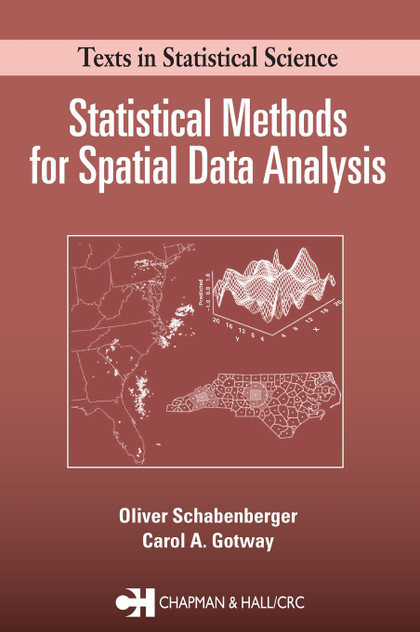
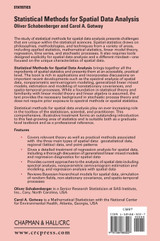
Understanding spatial statistics requires tools from applied and mathematical statistics, linear model theory, regression, time series, and stochastic processes. It also requires a mindset that...
Discover your next great read at BookLoop, Australiand online bookstore offering a vast selection of titles across various genres and interests. Whether you're curious about what's trending or searching for graphic novels that captivate, thrilling crime and mystery fiction, or exhilarating action and adventure stories, our curated collections have something for every reader. Delve into imaginative fantasy worlds or explore the realms of science fiction that challenge the boundaries of reality. Fans of contemporary narratives will find compelling stories in our contemporary fiction section. Embark on epic journeys with our fantasy and science fiction titles,
Shop Trending Books and New Releases
Explore our new releases for the most recent additions in romance books, fantasy books, graphic novels, crime and mystery books, science fiction books as well as biographies, cookbooks, self help books, tarot cards, fortunetelling and much more. With titles covering current trends, booktok and bookstagram recommendations, and emerging authors, BookLoop remains your go-to local australian bookstore for buying books online across all book genres.
Shop Best Books By Collection
Stay updated with the literary world by browsing our trending books, featuring the latest bestsellers and critically acclaimed works. Explore titles from popular brands like Minecraft, Pokemon, Star Wars, Bluey, Lonely Planet, ABIA award winners, Peppa Pig, and our specialised collection of ADHD books. At BookLoop, we are committed to providing a diverse and enriching reading experience for all.
Sign In
your cart
Your cart is empty
Menu
Search
PRE-SALES
If you have any questions before making a purchase chat with our online operators to get more information.