Trending Bestseller

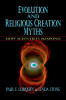
Evolution and Religious Creation Myths

No reviews yet Write a Review
Relying mostly on modern genetic science, this book exposes how various forms of creationism-including intelligent design-fail to provide testable models for the appearance and evolution of life. On the contrary, science has been very successful in the description of the unguided processes that led to the creation of the universe and one of its consequences, the appearance of life forms, including humans.
Hardback
04-June-2007
RRP: $131.95
$56.00
Ships in 3-5 business days
Hurry up! Current stock:
Polls show that 45% of the American public believes that humans were created about 10,000 years ago and that evolution is a fictitious myth. Another 25% believes that changes in the natural world are directed by a supernatural being with a particular goal in mind. This thinking clashes head on with scientific findings from the past 150 years, and there is a dearth of public critical thinking about the natural world within a scientific framework. Evolution and Religious Creation Myths seeks to educate and arm the public on the differences between myth and science, fiction and theory. The book begins with a whirlwind tour of creation stories from several religions. The authors then explore how certain forms of religious fundamentalism clash with the science of evolution. They review how creationists and intelligent design proponents misuse and misrepresent scientific terminology and conclusions to further their own agendas. How do scientists respond to this threat? Modern science, which includes a level of indeterminacy, or chance, cannot support the premise that a supernatural designer engineered nature for a particular purpose in a deterministic fashion. This holds true for the creation of the universe, the appearance of the first biological molecules, chemical evolution, and the evolution of life forms through mutation, natural selection, and genetic drift. Instead, human biological and cultural evolution is described within a genetic framework. Scientists use a barrage of genetic tests and DNA phylogenies to support the scientific basis for evolution. For anyone who has ever needed to argue why evolution and creationism are not both valid theories that deserve equal attention, this book clearly defines the difference between theory and myth. Scientists, teachers, and defenders of the truth should read this book in preparation for when they are called upon to respond.

This product hasn't received any reviews yet. Be the first to review this product!

RRP: $131.95
$56.00
Ships in 3-5 business days
Hurry up! Current stock:

Evolution and Religious Creation Myths

RRP: $131.95
$56.00

Description

Polls show that 45% of the American public believes that humans were created about 10,000 years ago and that evolution is a fictitious myth. Another 25% believes that changes in the natural world are directed by a supernatural being with a particular goal in mind. This thinking clashes head on with scientific findings from the past 150 years, and there is a dearth of public critical thinking about the natural world within a scientific framework. Evolution and Religious Creation Myths seeks to educate and arm the public on the differences between myth and science, fiction and theory. The book begins with a whirlwind tour of creation stories from several religions. The authors then explore how certain forms of religious fundamentalism clash with the science of evolution. They review how creationists and intelligent design proponents misuse and misrepresent scientific terminology and conclusions to further their own agendas. How do scientists respond to this threat? Modern science, which includes a level of indeterminacy, or chance, cannot support the premise that a supernatural designer engineered nature for a particular purpose in a deterministic fashion. This holds true for the creation of the universe, the appearance of the first biological molecules, chemical evolution, and the evolution of life forms through mutation, natural selection, and genetic drift. Instead, human biological and cultural evolution is described within a genetic framework. Scientists use a barrage of genetic tests and DNA phylogenies to support the scientific basis for evolution. For anyone who has ever needed to argue why evolution and creationism are not both valid theories that deserve equal attention, this book clearly defines the difference between theory and myth. Scientists, teachers, and defenders of the truth should read this book in preparation for when they are called upon to respond.

Customers Also Viewed