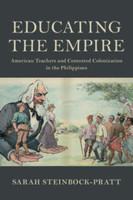
This book examines how education contributed to the creation of US empire in the Philippines by focusing on American teachers and the Filipinos with whom they lived and worked. While education was located at the heart of the imperial project, used to justify empire, the implementation of schooling in the islands deviated from the expectations of the colonial state. American teachers at times upheld, adapted, circumvented, or entirely disregarded colonial policy. Despite the language of white masculinity that imbued imperial discourse, the appointment of white women and black men as teachers allowed them to claim roles and identities that transformed understandings of gender and race. Filipinos also used the American educational system to articulate their own understandings of empire. In this context, schools were a microcosm for the colonial state, with contestations over education often standing in for the colonial relationship itself.
Discover the fascinating history of how the British Empire used education to gain and maintain power over its colonies, as told by Richard Burdon Haldane.This work has been selected by scholars as...
Education for Empire brings together topics in American history often treated separately: schools, race, immigration, and empire building. During the Gilded Age and Progressive Era, American imperial...
This is a reproduction of a book published before 1923. This book may have occasional imperfections such as missing or blurred pages, poor pictures, errant marks, etc. that were either part of the...
Empire and Education builds on the influential work of Michael Hardt and Antonio Negri to examine the role of education and pedagogy in the making and unmaking of Empire within our historical...
For the vast majority of Native American students in federal Indian boarding schools at the turn of the twentieth century, the experience was nothing short of tragic. Dislocated from family and...