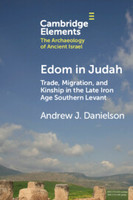

During the late Iron Age (800-539 BCE) in the semi-arid southern Levant, small competing kingdoms navigated a tenuous position between their local populace and the external empires who dominated the region. For kingdoms such as Judah and Edom, this period was also one of opportunity due to their location at the intersection of lucrative trade networks connecting the Mediterranean and Arabian worlds. Such economic opportunity, together with subsistence practices rooted in mobility, resulted in a diverse and contested social landscape in the northeastern Negev borderland region between these two kingdoms. This Element explores the multifaceted interactions in this landscape. Insightful case studies highlight patterns of cross-cultural interaction and identity negotiation through the lenses of culinary practices, religion, language, and text. Ultimately, this analysis explores the lived realities of the region's inhabitants, migrants, and traders over multiple generations, emphasizing social diversity and entanglement as an integral feature of the region.
This is a reproduction of a book published before 1923. This book may have occasional imperfections such as missing or blurred pages, poor pictures, errant marks, etc. that were either part of the...
This work has been selected by scholars as being culturally important, and is part of the knowledge base of civilization as we know it.This work is in the "public domain in the United States of...
The royal family of Judah had a tremendous impact on history and played a role in shaping who we are today. In Judah Scepter, author Brian Arundell Howard provides a refreshing perspective about this...