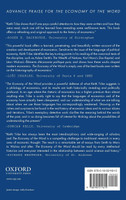
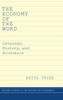
It was only in the sixteenth century that texts began to refer to the significance of "economic activity" -- of sustaining life. This was not because the ordinary business of life was thought unimportant, but because the principles governing economic conduct were thought to be obvious or uncontroversial. The subsequent development of economic writing thus parallels the development of capitalism in Western Europe. From the seventeenth to the twenty-first century there has been a constant shift in content, audience, and form of argument as the literature of economic argument developed. The Economy of the Word proposes that to understand the various forms that economic literature has taken, we need to adopt a more literary approach in economics specifically, to adopt the instruments and techniques of philology. This way we can conceive the history of economic thought to be an on-going work in progress, rather than the story of the emergence of modern economic thinking. This approach demands that we pay attention to the construction of particular texts, showing the work of economic argument in different contexts. In sum, we need to pay attention to the "economy of the word."
The Economy of the Word is divided into three parts. The first explains what the term "economy" has meant from Antiquity to Modernity, coupling this conceptual history with an examination of how the idea of national income was turned into a number during the first half of the twentieth century. The second part is devoted to Adam Smith's Wealth of Nations, considering first the manner in which Smith deals with international trade, and then the way in which the book was read in the course of the nineteenth century. Part III examines the sources used by Karl Marx and Léon Walras in developing their economic analysis, drawing attention to their shared intellectual context in French political economy.
It was only in the sixteenth century that texts began to refer to the significance of "economic activity" -- of sustaining life. This was not because the ordinary business of life was thought unimportant, but because the principles governing economic conduct were thought to be obvious or uncontroversial. The subsequent development of economic writing thus parallels the development of capitalism in Western Europe. From the seventeenth to the twenty-first century there has been a constant shift in content, audience, and form of argument as the literature of economic argument developed. The Economy of the Word proposes that to understand the various forms that economic literature has taken, we need to adopt a more literary approach in economics specifically, to adopt the instruments and techniques of philology. This way we can conceive the history of economic thought to be an on-going work in progress, rather than the story of the emergence of modern economic thinking. This approach demands that we pay attention to the construction of particular texts, showing the work of economic argument in different contexts. In sum, we need to pay attention to the "economy of the word."
The Economy of the Word is divided into three parts. The first explains what the term "economy" has meant from Antiquity to Modernity, coupling this conceptual history with an examination of how the idea of national income was turned into a number during the first half of the twentieth century. The second part is devoted to Adam Smith's Wealth of Nations, considering first the manner in which Smith deals with international trade, and then the way in which the book was read in the course of the nineteenth century. Part III examines the sources used by Karl Marx and Léon Walras in developing their economic analysis, drawing attention to their shared intellectual context in French political economy.
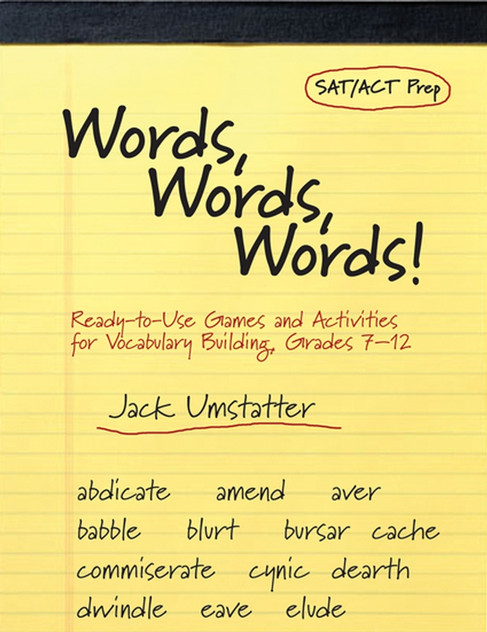
Words, Words, Words offers teachers a handy and much-needed resource filled with creative and engaging games and activities that will help students in grades 7-12 improve their vocabulary. The book...
Discover your next great read at BookLoop, Australiand online bookstore offering a vast selection of titles across various genres and interests. Whether you're curious about what's trending or searching for graphic novels that captivate, thrilling crime and mystery fiction, or exhilarating action and adventure stories, our curated collections have something for every reader. Delve into imaginative fantasy worlds or explore the realms of science fiction that challenge the boundaries of reality. Fans of contemporary narratives will find compelling stories in our contemporary fiction section. Embark on epic journeys with our fantasy and science fiction titles,
Shop Trending Books and New Releases
Explore our new releases for the most recent additions in romance books, fantasy books, graphic novels, crime and mystery books, science fiction books as well as biographies, cookbooks, self help books, tarot cards, fortunetelling and much more. With titles covering current trends, booktok and bookstagram recommendations, and emerging authors, BookLoop remains your go-to local australian bookstore for buying books online across all book genres.
Shop Best Books By Collection
Stay updated with the literary world by browsing our trending books, featuring the latest bestsellers and critically acclaimed works. Explore titles from popular brands like Minecraft, Pokemon, Star Wars, Bluey, Lonely Planet, ABIA award winners, Peppa Pig, and our specialised collection of ADHD books. At BookLoop, we are committed to providing a diverse and enriching reading experience for all.
Sign In
your cart
Your cart is empty
Menu
Search
PRE-SALES
If you have any questions before making a purchase chat with our online operators to get more information.