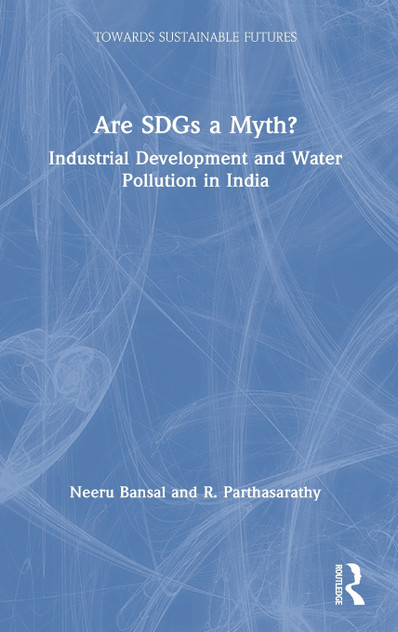
This is the first book that employs economics to develop and apply an analytical framework for assessing progress towards the Sustainable Development Goals (SDGs). The authors explore the historical context for the underlying sustainability concept, develop an economics-based analytical framework for assessing progress towards the SDGs, and discuss the implications for sustainability policy and future research. Economics is concerned with analysing the trade-offs in allocating scarce means to achieve various ends. Thus, economic methods are ideally suited to assessing how progress towards one or more SDGs may come at the expense of achieving other goals. Such interactions are inevitable in meeting the 2030 Agenda over the next decade, given that the SDGs include different economic, social, and environmental elements. Although it may be possible to make progress across all 17 goals by 2030, it is more likely that improvement toward all goals will be mixed. For example, we may have reduced poverty or hunger over recent years, but the way in which this progress has been achieved - e.g. through economic expansion and industrial growth - may have come at the cost in achieving some environmental or social goals. On the other hand, progress in reducing poverty is likely to go hand-in-hand with other important goals, such as eliminating hunger, improving clean water and sanitation, and ensuring good health and well-being. Assessing these interactions is essential for guiding policy, so that countries and the international community can begin implementing the right set of environmental, social and economic policies to achieve more sustainable and inclusive global development.
This is the first book that employs economics to develop and apply an analytical framework for assessing progress towards the Sustainable Development Goals (SDGs). The authors explore the historical context for the underlying sustainability concept, develop an economics-based analytical framework for assessing progress towards the SDGs, and discuss the implications for sustainability policy and future research. Economics is concerned with analysing the trade-offs in allocating scarce means to achieve various ends. Thus, economic methods are ideally suited to assessing how progress towards one or more SDGs may come at the expense of achieving other goals. Such interactions are inevitable in meeting the 2030 Agenda over the next decade, given that the SDGs include different economic, social, and environmental elements. Although it may be possible to make progress across all 17 goals by 2030, it is more likely that improvement toward all goals will be mixed. For example, we may have reduced poverty or hunger over recent years, but the way in which this progress has been achieved - e.g. through economic expansion and industrial growth - may have come at the cost in achieving some environmental or social goals. On the other hand, progress in reducing poverty is likely to go hand-in-hand with other important goals, such as eliminating hunger, improving clean water and sanitation, and ensuring good health and well-being. Assessing these interactions is essential for guiding policy, so that countries and the international community can begin implementing the right set of environmental, social and economic policies to achieve more sustainable and inclusive global development.
This book discusses the continued emphasis on development gains in India's national policies and its quest to meet sustainable development goals. It offers an analysis of the laws and infrastructure...
The book presents contributions on statistical models and methods applied, for both data science and SDGs, in one place. Measuring and controlling data of SDGs, data driven measurement of progress...
Against the backdrop of Covid-19, this edited volume will utilize a gendered lens to explore the United Nation's Sustainable Development Goals (SDGs), with a clear focus on challenging the omission...
There is a dearth of collections of scholarly works dedicated wholly to African issues, that comes out of the work done by African scholars and practitioners with both African collaborators and from...
Discover your next great read at BookLoop, Australiand online bookstore offering a vast selection of titles across various genres and interests. Whether you're curious about what's trending or searching for graphic novels that captivate, thrilling crime and mystery fiction, or exhilarating action and adventure stories, our curated collections have something for every reader. Delve into imaginative fantasy worlds or explore the realms of science fiction that challenge the boundaries of reality. Fans of contemporary narratives will find compelling stories in our contemporary fiction section. Embark on epic journeys with our fantasy and science fiction titles,
Shop Trending Books and New Releases
Explore our new releases for the most recent additions in romance books, fantasy books, graphic novels, crime and mystery books, science fiction books as well as biographies, cookbooks, self help books, tarot cards, fortunetelling and much more. With titles covering current trends, booktok and bookstagram recommendations, and emerging authors, BookLoop remains your go-to local australian bookstore for buying books online across all book genres.
Shop Best Books By Collection
Stay updated with the literary world by browsing our trending books, featuring the latest bestsellers and critically acclaimed works. Explore titles from popular brands like Minecraft, Pokemon, Star Wars, Bluey, Lonely Planet, ABIA award winners, Peppa Pig, and our specialised collection of ADHD books. At BookLoop, we are committed to providing a diverse and enriching reading experience for all.
Sign In
your cart
Your cart is empty
Menu
Search
PRE-SALES
If you have any questions before making a purchase chat with our online operators to get more information.