Over the past two decades we have witnessed something of a revolution in the natural sciences as thermodynamic thinking evolved from an equilibrium, or 'classical', perspective, to a nonequilibrium, or 'self organisational' one. In this transition, thermodynamics has been applied in new ways and in new fields of inquiry. Chemical and biological (evolutionary) processes have been analysed, increasingly, in non equilibrium thermodynamical terms. Economics has, since the late 19th century, relied heavily upon metaphors and analogies derived from the natural sciences - mechanical analogies cast in terms of traditional Newtonian physics and expressed in terms of Cartesian logic have been especially popular. Thermodynamics, on the other hand, has been less popular, despite its early application in economics by Stanley Jevons, the father of modern notions of utility maximisation in neoclassical economics, and despite its promotion in economic contexts by Paul Samuelson, the author of the definitive treatise upon which post war neoclassical economic theory was based, namely, his Foundations of Economic Analysis. The general neglect of thermodynamic thinking in economics was brought to our attention by Nicholas Georgescu-Roegen in the late 1960s, by which time economic theory, evidenced in, for example, the Arrow Debreu general eqUilibrium system, had become so sophisticated that it could not be penetrated by thermodynamical ideas. To Georgescu Roegen, this presented something of a crisis in economics because neglect of thermodynamics led, in his view, to blindness amongst economists to an economy/environment problem in the global economy.
Over the past two decades we have witnessed something of a revolution in the natural sciences as thermodynamic thinking evolved from an equilibrium, or 'classical', perspective, to a nonequilibrium, or 'self organisational' one. In this transition, thermodynamics has been applied in new ways and in new fields of inquiry. Chemical and biological (evolutionary) processes have been analysed, increasingly, in non equilibrium thermodynamical terms. Economics has, since the late 19th century, relied heavily upon metaphors and analogies derived from the natural sciences - mechanical analogies cast in terms of traditional Newtonian physics and expressed in terms of Cartesian logic have been especially popular. Thermodynamics, on the other hand, has been less popular, despite its early application in economics by Stanley Jevons, the father of modern notions of utility maximisation in neoclassical economics, and despite its promotion in economic contexts by Paul Samuelson, the author of the definitive treatise upon which post war neoclassical economic theory was based, namely, his Foundations of Economic Analysis. The general neglect of thermodynamic thinking in economics was brought to our attention by Nicholas Georgescu-Roegen in the late 1960s, by which time economic theory, evidenced in, for example, the Arrow Debreu general eqUilibrium system, had become so sophisticated that it could not be penetrated by thermodynamical ideas. To Georgescu Roegen, this presented something of a crisis in economics because neglect of thermodynamics led, in his view, to blindness amongst economists to an economy/environment problem in the global economy.
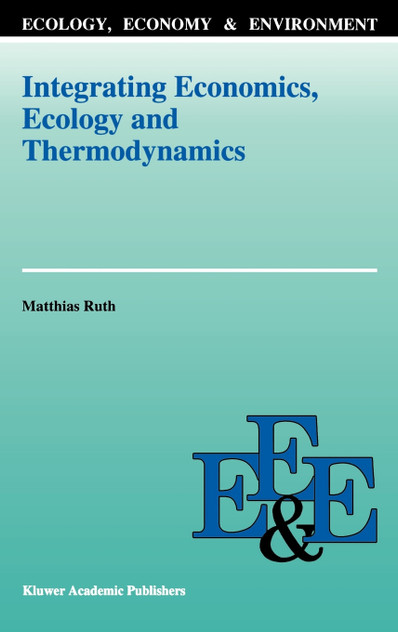
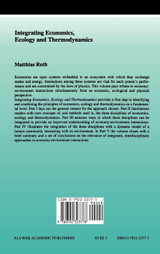
Economies are open systems embedded in an ecosystem with which they exchange matter and energy. Interactions among these systems are vital for each system's performance and are constrained by the...
Carbon dioxide (CO2 or R744), a natural refrigerant was proposed in the 1990s to be used as an alternative to hazardous gases which deplete the earth's ozone layer. During the last decades, several...
Discover your next great read at BookLoop, Australiand online bookstore offering a vast selection of titles across various genres and interests. Whether you're curious about what's trending or searching for graphic novels that captivate, thrilling crime and mystery fiction, or exhilarating action and adventure stories, our curated collections have something for every reader. Delve into imaginative fantasy worlds or explore the realms of science fiction that challenge the boundaries of reality. Fans of contemporary narratives will find compelling stories in our contemporary fiction section. Embark on epic journeys with our fantasy and science fiction titles,
Shop Trending Books and New Releases
Explore our new releases for the most recent additions in romance books, fantasy books, graphic novels, crime and mystery books, science fiction books as well as biographies, cookbooks, self help books, tarot cards, fortunetelling and much more. With titles covering current trends, booktok and bookstagram recommendations, and emerging authors, BookLoop remains your go-to local australian bookstore for buying books online across all book genres.
Shop Best Books By Collection
Stay updated with the literary world by browsing our trending books, featuring the latest bestsellers and critically acclaimed works. Explore titles from popular brands like Minecraft, Pokemon, Star Wars, Bluey, Lonely Planet, ABIA award winners, Peppa Pig, and our specialised collection of ADHD books. At BookLoop, we are committed to providing a diverse and enriching reading experience for all.
Sign In
your cart
Your cart is empty
Menu
Search
PRE-SALES
If you have any questions before making a purchase chat with our online operators to get more information.