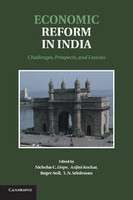
The essays in this volume are written by leading economists working on the Indian economy. They collectively emphasize the importance of policies and institutions for sustained growth and poverty reduction, stressing that the success of sector-specific policies is vitally dependent on the nature of markets and the functioning of institutions such as those charged with regulating and overseeing critical sectors. Individual contributions assess the role of Indian government policy in key sectors and emphasize the policies required to ensure improvements in these sectors. The first section discusses aspects of the macro economy; the second deals with agriculture and social sectors; the third with jobs and how labor markets function in agriculture, industry and services; and the fourth with infrastructure services, specifically electricity, telecommunications and transport. The essays are drawn from the most influential papers presented in recent years on Indian economic policy at the Stanford Center for International Development.
India is the world's largest democracy, and second-largest developing country. For forty years it has also been one of the most dirigiste and autarkic. The 1980s saw most developing and erstwhile...
'Attitudinal change' in the context of economic reforms has been referred to in Rodrik and Subramanian (2005), DeLong (2003), Kohli (1989), and Panagariya (2004, 2008). This dissertation provides...