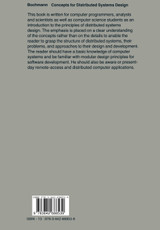
Future requirements for computing speed, system reliability, and cost-effectiveness entail the development of alternative computers to replace the traditional von Neumann organization. As computing networks come into being, one of the latest dreams is now possible - distributed computing. Distributed computing brings transparent access to as much computer power and data as the user needs for accomplishing any given task - simultaneously achieving high performance and reliability. The subject of distributed computing is diverse, and many researchers are investigating various issues concerning the structure of hardware and the design of distributed software. Distributed System Design defines a distributed system as one that looks to its users like an ordinary system, but runs on a set of autonomous processing elements (PEs) where each PE has a separate physical memory space and the message transmission delay is not negligible. With close cooperation among these PEs, the system supports an arbitrary number of processes and dynamic extensions. Distributed System Design outlines the main motivations for building a distributed system, including:
inherently distributed applications
performance/cost
resource sharing
flexibility and extendibility
availability and fault tolerance
scalability Presenting basic concepts, problems, and possible solutions, this reference serves graduate students in distributed system design as well as computer professionals analyzing and designing distributed/open/parallel systems. Chapters discuss:
the scope of distributed computing systems
general distributed programming languages and a CSP-like distributed control description language (DCDL)
expressing parallelism, interprocess communication and synchronization, and fault-tolerant design
two approaches describing a distributed system: the time-space view and the interleaving view
mutual exclusion and related issues, including election, bidding, and self-stabilization
prevention and detection of deadlock
reliability, safety, and security as well as various methods of handling node, communication, Byzantine, and software faults
efficient interprocessor communication mechanisms as well as these mechanisms without specific constraints, such as adaptiveness, deadlock-freedom, and fault-tolerance
virtual channels and virtual networks
load distribution problems
synchronization of access to shared data while supporting a high degree of concurrency
Future requirements for computing speed, system reliability, and cost-effectiveness entail the development of alternative computers to replace the traditional von Neumann organization. As computing networks come into being, one of the latest dreams is now possible - distributed computing. Distributed computing brings transparent access to as much computer power and data as the user needs for accomplishing any given task - simultaneously achieving high performance and reliability. The subject of distributed computing is diverse, and many researchers are investigating various issues concerning the structure of hardware and the design of distributed software. Distributed System Design defines a distributed system as one that looks to its users like an ordinary system, but runs on a set of autonomous processing elements (PEs) where each PE has a separate physical memory space and the message transmission delay is not negligible. With close cooperation among these PEs, the system supports an arbitrary number of processes and dynamic extensions. Distributed System Design outlines the main motivations for building a distributed system, including:
inherently distributed applications
performance/cost
resource sharing
flexibility and extendibility
availability and fault tolerance
scalability Presenting basic concepts, problems, and possible solutions, this reference serves graduate students in distributed system design as well as computer professionals analyzing and designing distributed/open/parallel systems. Chapters discuss:
the scope of distributed computing systems
general distributed programming languages and a CSP-like distributed control description language (DCDL)
expressing parallelism, interprocess communication and synchronization, and fault-tolerant design
two approaches describing a distributed system: the time-space view and the interleaving view
mutual exclusion and related issues, including election, bidding, and self-stabilization
prevention and detection of deadlock
reliability, safety, and security as well as various methods of handling node, communication, Byzantine, and software faults
efficient interprocessor communication mechanisms as well as these mechanisms without specific constraints, such as adaptiveness, deadlock-freedom, and fault-tolerance
virtual channels and virtual networks
load distribution problems
synchronization of access to shared data while supporting a high degree of concurrency
This book is written for computer programmers, analysts and scientists, as well as computer science students, as an intro duction to the principles of distributed system design. The emphasis is...
Bachelor Thesis from the year 2018 in the subject Engineering - Civil Engineering, grade: 1, Arba Minch University, course: water supply and environmetal engineering, language: English, abstract: The...
Design and Analysis of Distributed Embedded Systems is organized similar to the conference. Chapters 1 and 2 deal with specification methods and their analysis while Chapter 6 concentrates ...
Discover your next great read at BookLoop, Australiand online bookstore offering a vast selection of titles across various genres and interests. Whether you're curious about what's trending or searching for graphic novels that captivate, thrilling crime and mystery fiction, or exhilarating action and adventure stories, our curated collections have something for every reader. Delve into imaginative fantasy worlds or explore the realms of science fiction that challenge the boundaries of reality. Fans of contemporary narratives will find compelling stories in our contemporary fiction section. Embark on epic journeys with our fantasy and science fiction titles,
Shop Trending Books and New Releases
Explore our new releases for the most recent additions in romance books, fantasy books, graphic novels, crime and mystery books, science fiction books as well as biographies, cookbooks, self help books, tarot cards, fortunetelling and much more. With titles covering current trends, booktok and bookstagram recommendations, and emerging authors, BookLoop remains your go-to local australian bookstore for buying books online across all book genres.
Shop Best Books By Collection
Stay updated with the literary world by browsing our trending books, featuring the latest bestsellers and critically acclaimed works. Explore titles from popular brands like Minecraft, Pokemon, Star Wars, Bluey, Lonely Planet, ABIA award winners, Peppa Pig, and our specialised collection of ADHD books. At BookLoop, we are committed to providing a diverse and enriching reading experience for all.
Sign In
your cart
Your cart is empty
Menu
Search
PRE-SALES
If you have any questions before making a purchase chat with our online operators to get more information.