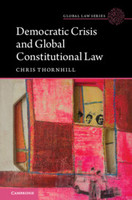
Democratic Crisis and Global Constitutional Law explains the current weakness of democratic polities by examining antinomies in constitutional democracy and its theoretical foundations. This book argues that democracy is usually analysed in a theoretical lens that is not adequately sensitive to its historical origins. The author proposes a new sociological framework for understanding democracy and its constitutional preconditions, stressing the linkage between classical patterns of democratic citizenship and military processes and arguing that democratic stability at the national level relies on the formation of robust normative systems at the international level. On this basis, he argues that democracy is frequently exposed to crisis because the normative terms in which it is promoted and justified tend to simplify its nature. These terms create a legitimising space in which anti-democratic movements, typically with a populist emphasis, can take shape and flourish.
The book shares the results of project research granted by the Castilla-La Mancha government, which has been composed by philosophers of law and criminal law researchers, whose main conclusions are...
This volume critically discusses therelationship between democracy and constitutionalism. It does so with a view torespond to objections raised by legal and political philosophers who aresceptical of...
This book is the first to address the multi-faceted influence of the global financial crisis on the national constitutions of the countries most affected. By tracing the impact of the crisis on...
An ideal supplement for professors who wish to incorporate comparative law into their constitutional law courses, Global Perspectives on Constitutional Law introduces students to the various ways...