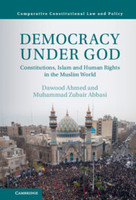
State recognition of Islam in Muslim countries invites fierce debate from scholars and politicians alike, some of whom assume an inherent conflict between Islam and liberal democracy. Analyzing case studies and empirical data from several Muslim-majority countries, Ahmed and Abbasi find, counterintuitively, that in many Muslim countries, constitutional recognition of Islam often occurs during moments of democratization. Indeed, the insertion of Islam in a constitution is frequently accompanied by an expansion, not a reduction, in constitutional human rights, with case law from higher courts in Egypt and Pakistan demonstrating that potential tensions between the constitutional pursuit of human rights, liberal democracy and Islam are capable of judicial resolution. The authors also argue that colonial history was pivotal in determining whether a country adopted the constitutional path of Islam or secularism partly explaining why Islam in constitutional politics survived and became more prevalent in Muslim countries that were colonized by the British, and not those colonized by the French or Soviets.
This is a reproduction of a book published before 1923. This book may have occasional imperfections such as missing or blurred pages, poor pictures,...
This is an EXACT reproduction of a book published before 1923. This IS NOT an OCR'd book with strange characters, introduced typographical errors, and jumbled words. This book may have occasional...
I. A Dangerous and/or Useful Kingdom? ............ 5 II. Is There a Concept of the Kingdom of God? . . . . .. . 9 III. The Development of the Concept of a Kingdom of God in the Old Testament ...........
The core of this book is a systematic treatment of the historic transformation of the West from monarchy to democracy. Revisionist in nature, it reaches the conclusion that monarchy is a lesser evil...