Trending Bestseller

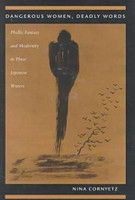
Dangerous Women, Deadly Words

Nina Cornyetz

No reviews yet Write a Review
Hardback
318 Pages
$163.00
Ships in 3-5 business days
Hurry up! Current stock:
"Dangerous Women, Deadly Words" is a materialist-feminist, psychoanalytic analysis of a modern Japanese literary trope the dangerous woman in the works of three twentieth-century writers: Izumi Kyoka (1873-1939), Enchi Fumiko (1905-86), and Nakagami Kenji (1946-92). Linked to archaisms and magical realms, the trope of the dangerous, spiritually empowered woman culls from and commingles archetypes from throughout the Japanese canon, including mountain witches, female shamans, and snake-women. In radical opposition to the conventional interpretation of the trope as a repository for transhistorical notions of female essence and Japaneseness, the author reads the dangerous woman as connected in complex ways with twentieth-century Japanese epistemological upheavals: the negotiation of modern phallic subjectivity, modernization of a homosocial economy, the radically changed status of women, reified maternity, compulsory heterosexuality, and the function of literature.

This product hasn't received any reviews yet. Be the first to review this product!

$163.00
Ships in 3-5 business days
Hurry up! Current stock:

Dangerous Women, Deadly Words

$163.00

Description

"Dangerous Women, Deadly Words" is a materialist-feminist, psychoanalytic analysis of a modern Japanese literary trope the dangerous woman in the works of three twentieth-century writers: Izumi Kyoka (1873-1939), Enchi Fumiko (1905-86), and Nakagami Kenji (1946-92). Linked to archaisms and magical realms, the trope of the dangerous, spiritually empowered woman culls from and commingles archetypes from throughout the Japanese canon, including mountain witches, female shamans, and snake-women. In radical opposition to the conventional interpretation of the trope as a repository for transhistorical notions of female essence and Japaneseness, the author reads the dangerous woman as connected in complex ways with twentieth-century Japanese epistemological upheavals: the negotiation of modern phallic subjectivity, modernization of a homosocial economy, the radically changed status of women, reified maternity, compulsory heterosexuality, and the function of literature.
Customers Also Viewed