
Trending Bestseller

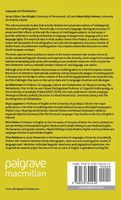
Dangerous Multilingualism

Northern Perspectives on Order, Purity and Normality

No reviews yet Write a Review
Hardback
22 May 2012
RRP: $185.90
$183.11
Ships in 3-5 business days
Hurry up! Current stock:
The founding father of 'social capital', Pierre Bourdieu, said that treating the church as an economic enterprise would lead to uproar, disbelief and the laughter of the bishops. Yet, in the last couple of decades, policymakers and social scientists have increasingly sought to capitalize on faith by asking whether it produces social capital. In the context of faithbased social action in communities, this book asks what becomes of faiths when seen as social capital? Is the social subjugated to the capital part of the equation? As the debt crisis took hold, doesn't the relationship between the social and capital seem increasingly unbalanced? Using new research, theory and critical analysis, this book asks whether faiths can help rebalance society in favour of the human scale of life in communities, focusing on the value of the ordinary relationships which are already there, regardless of their wider 'use'.

You Can Find This Book In

    Book Details
    ISBN-13
    9780230321410
    Author
    Sirpa Leppänen
    Publisher
    Springer Nature B.V.
    Published
    22 May 2012
    Format
    Hardback

    This product hasn't received any reviews yet. Be the first to review this product!

    RRP: $185.90
    $183.11
    Ships in 3-5 business days
    Hurry up! Current stock:

    Dangerous Multilingualism

    RRP: $185.90
    $183.11

    Description

    The founding father of 'social capital', Pierre Bourdieu, said that treating the church as an economic enterprise would lead to uproar, disbelief and the laughter of the bishops. Yet, in the last couple of decades, policymakers and social scientists have increasingly sought to capitalize on faith by asking whether it produces social capital. In the context of faithbased social action in communities, this book asks what becomes of faiths when seen as social capital? Is the social subjugated to the capital part of the equation? As the debt crisis took hold, doesn't the relationship between the social and capital seem increasingly unbalanced? Using new research, theory and critical analysis, this book asks whether faiths can help rebalance society in favour of the human scale of life in communities, focusing on the value of the ordinary relationships which are already there, regardless of their wider 'use'.

    You Can Find This Book In

      This Book Is Categorised As