In this thought-provoking book, Denis Noble formulates the theory of biological relativity, emphasising that living organisms operate at multiple levels of complexity and must therefore be analysed from a multi-scale, relativistic perspective. Noble explains that all biological processes operate by means of molecular, cellular and organismal networks. The interactive nature of these fundamental processes is at the core of biological relativity and, as such, challenges simplified molecular reductionism. Noble shows that such an integrative view emerges as the necessary consequence of the rigorous application of mathematics to biology. Drawing on his pioneering work in the mathematical physics of biology, he shows that what emerges is a deeply humane picture of the role of the organism in constraining its chemistry, including its genes, to serve the organism as a whole, especially in the interaction with its social environment. This humanistic, holistic approach challenges the common gene-centred view held by many in modern biology and culture.
Sometimes a moment of awareness and realization is a liberation of decades and ages of state of the darkness of confusion and randomness. That moment is a soulful dance of the universal unity...
Dancing to a Different Tune is the fifth book of poetry by the author, a mystic and a realist; a woman who is, perhaps, complicated but not conflicted. This book also includes her personal prose...
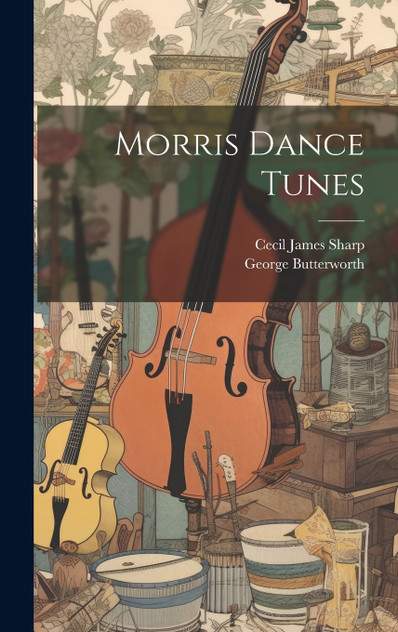
This book is a collection of traditional English folk tunes associated with Morris dancing, a form of folk dance that originated in the Cotswolds in the 16th century. The book includes sheet music...
Through short stories, poetry, and humor, author Bernadette Reynolds narrates the story of her life. In Dance to Your Own Tune she narrates how, for many years, she attempted to climb her mountain,...