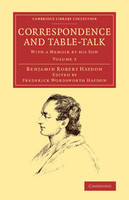
Artist, diarist, and devotee of the Elgin Marbles, Benjamin Robert Haydon (1786-1846) is best known for his large-scale paintings, such as Christ's Entry into Jerusalem and The Raising of Lazarus. After he entered the Royal Academy in 1805 as a student of Henry Fuseli, his forthright views and combative manner fuelled a feud with the institution and perceived enemies. His unshakeable belief in his own genius and his unwillingness to compromise his artistic standards drew him ever further into debt, which ultimately contributed to his suicide. As a writer, Haydon's acute eye for the humorous is demonstrated throughout his correspondence and diary. In this two-volume work, first published in 1876, his son Frederick Wordsworth Haydon (1827-86) brings together letters and extracts from his father's journals. Volume 2 contains selected letters, including those to and from Keats and Wordsworth, along with a host of witty and erudite journal extracts.
This is a pre-1923 historical reproduction that was curated for quality. Quality assurance was conducted on each of these books in an attempt to remove books with imperfections introduced by the...
This is a reproduction of a book published before 1923. This book may have occasional imperfections such as missing or blurred pages, poor pictures, errant marks, etc. that were either part of the...
Explore the world of 19th century British art through the eyes of one of its most celebrated figures. This collection of letters and conversations offers readers a fascinating glimpse into the life...
In this classic guide to business correspondence, William Cushing Bamburgh covers all aspects of writing effective business letters. From grammar and style to formatting and tone, Bamburgh's expert...
This work has been selected by scholars as being culturally important, and is part of the knowledge base of civilization as we know it. This work was reproduced from the original artifact, and...