Trending Bestseller

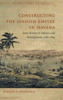
Constructing the Spanish Empire in Havana

State Slavery in Defense and Development, 1762-1835

Evelyn Jennings

No reviews yet Write a Review
Hardback
01 December 2020
$74.00
Ships in 3-5 business days
Hurry up! Current stock:

Constructing the Spanish Empire in Havana examines the political economy surrounding the use of enslaved laborers in the capital of Spanish imperial Cuba from 1762 to 1835. In this first book-length exploration of state slavery on the island, Evelyn P. Jennings demonstrates that the Spanish state's policies and practices in the ownership and employment of enslaved workers after 1762 served as a bridge from an economy based on imperial service to a rapidly expanding plantation economy in the nineteenth century.

The Spanish state had owned and exploited enslaved workers in Cuba since the early 1500s. After the humiliating yearlong British occupation of Havana beginning in 1762, however, the Spanish Crown redoubled its efforts to purchase and maintain thousands of royal slaves to prepare Havana for what officials believed would be the imminent renewal of war with England. Jennings shows that the composition of workforces assigned to public projects depended on the availability of enslaved workers in various interconnected labor markets within Cuba, within the Spanish empire, and in the Atlantic world. Moreover, the site of enslavement, the work required, and the importance of that work according to imperial priorities influenced the treatment and relative autonomy of those laborers as well as the likelihood they would achieve freedom.

As plantation production for export purposes emerged as the most dynamic sector of Cuba's economy by 1810, the Atlantic networks used to obtain enslaved workers showed increasing strain. British abolitionism exerted additional pressure on the slave trade. To offset the loss of access to enslaved laborers, colonial officials expanded the state's authority to sentence deserters, vagrants, and fugitives, both enslaved and free, to labor in public works such as civil construction, road building, and the creation of Havana's defensive forts. State efforts in this area demonstrate the deep roots of state enslavement and forced labor in nineteenth-century Spanish colonialism and in capitalist development in the Atlantic world.

Constructing the Spanish Empire in Havana places the processes of building and sustaining the Spanish empire in the imperial hub of Havana in a comparative perspective with other sites of empire building in the Atlantic world. Furthermore, it considers the human costs of reproducing the Spanish empire in a major Caribbean port, the state's role in shaping the institution of slavery, and the experiences of enslaved and other coerced laborers both before and after the beginning of Cuba's sugar boom in the early nineteenth century.

This product hasn't received any reviews yet. Be the first to review this product!

$74.00
Ships in 3-5 business days
Hurry up! Current stock:

Constructing the Spanish Empire in Havana

$74.00

Description

Constructing the Spanish Empire in Havana examines the political economy surrounding the use of enslaved laborers in the capital of Spanish imperial Cuba from 1762 to 1835. In this first book-length exploration of state slavery on the island, Evelyn P. Jennings demonstrates that the Spanish state's policies and practices in the ownership and employment of enslaved workers after 1762 served as a bridge from an economy based on imperial service to a rapidly expanding plantation economy in the nineteenth century.

The Spanish state had owned and exploited enslaved workers in Cuba since the early 1500s. After the humiliating yearlong British occupation of Havana beginning in 1762, however, the Spanish Crown redoubled its efforts to purchase and maintain thousands of royal slaves to prepare Havana for what officials believed would be the imminent renewal of war with England. Jennings shows that the composition of workforces assigned to public projects depended on the availability of enslaved workers in various interconnected labor markets within Cuba, within the Spanish empire, and in the Atlantic world. Moreover, the site of enslavement, the work required, and the importance of that work according to imperial priorities influenced the treatment and relative autonomy of those laborers as well as the likelihood they would achieve freedom.

As plantation production for export purposes emerged as the most dynamic sector of Cuba's economy by 1810, the Atlantic networks used to obtain enslaved workers showed increasing strain. British abolitionism exerted additional pressure on the slave trade. To offset the loss of access to enslaved laborers, colonial officials expanded the state's authority to sentence deserters, vagrants, and fugitives, both enslaved and free, to labor in public works such as civil construction, road building, and the creation of Havana's defensive forts. State efforts in this area demonstrate the deep roots of state enslavement and forced labor in nineteenth-century Spanish colonialism and in capitalist development in the Atlantic world.

Constructing the Spanish Empire in Havana places the processes of building and sustaining the Spanish empire in the imperial hub of Havana in a comparative perspective with other sites of empire building in the Atlantic world. Furthermore, it considers the human costs of reproducing the Spanish empire in a major Caribbean port, the state's role in shaping the institution of slavery, and the experiences of enslaved and other coerced laborers both before and after the beginning of Cuba's sugar boom in the early nineteenth century.

Customers Also Viewed

Buy Books Online at BookLoop

Discover your next great read at BookLoop, Australiand online bookstore offering a vast selection of titles across various genres and interests. Whether you're curious about what's trending or searching for graphic novels that captivate, thrilling crime and mystery fiction, or exhilarating action and adventure stories, our curated collections have something for every reader. Delve into imaginative fantasy worlds or explore the realms of science fiction that challenge the boundaries of reality. Fans of contemporary narratives will find compelling stories in our contemporary fiction section. Embark on epic journeys with our fantasy and science fiction titles,

Shop Trending Books and New Releases

Explore our new releases for the most recent additions in romance books, fantasy books, graphic novels, crime and mystery books, science fiction books as well as biographies, cookbooks, self help books, tarot cards, fortunetelling and much more. With titles covering current trends, booktok and bookstagram recommendations, and emerging authors, BookLoop remains your go-to local australian bookstore for buying books online across all book genres.

Shop Best Books By Collection

Stay updated with the literary world by browsing our trending books, featuring the latest bestsellers and critically acclaimed works. Explore titles from popular brands like Minecraft, Pokemon, Star Wars, Bluey, Lonely Planet, ABIA award winners, Peppa Pig, and our specialised collection of ADHD books. At BookLoop, we are committed to providing a diverse and enriching reading experience for all.