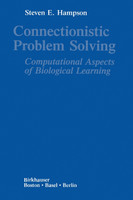
1. 1 The problem and the approach The model developed here, which is actually more a collection of com ponents than a single monolithic structure, traces a path from relatively low-level neural/connectionistic structures and processes to relatively high-level animal/artificial intelligence behaviors. Incremental extension of this initial path permits increasingly sophisticated representation and processing strategies, and consequently increasingly sophisticated behavior. The initial chapters develop the basic components of the sys tem at the node and network level, with the general goal of efficient category learning and representation. The later chapters are more con cerned with the problems of assembling sequences of actions in order to achieve a given goal state. The model is referred to as connectionistic rather than neural, be cause, while the basic components are neuron-like, there is only limited commitment to physiological realism. Consequently the neuron-like ele ments are referred to as "nodes" rather than "neurons". The model is directed more at the behavioral level, and at that level, numerous con cepts from animal learning theory are directly applicable to connectionis tic modeling. An attempt to actually implement these behavioral theories in a computer simulation can be quite informative, as most are only partially specified, and the gaps may be apparent only when actual ly building a functioning system. In addition, a computer implementa tion provides an improved capability to explore the strengths and limita tions of the different approaches as well as their various interactions.
1. 1 The problem and the approach The model developed here, which is actually more a collection of com ponents than a single monolithic structure, traces a path from relatively low-level neural/connectionistic structures and processes to relatively high-level animal/artificial intelligence behaviors. Incremental extension of this initial path permits increasingly sophisticated representation and processing strategies, and consequently increasingly sophisticated behavior. The initial chapters develop the basic components of the sys tem at the node and network level, with the general goal of efficient category learning and representation. The later chapters are more con cerned with the problems of assembling sequences of actions in order to achieve a given goal state. The model is referred to as connectionistic rather than neural, be cause, while the basic components are neuron-like, there is only limited commitment to physiological realism. Consequently the neuron-like ele ments are referred to as "nodes" rather than "neurons". The model is directed more at the behavioral level, and at that level, numerous con cepts from animal learning theory are directly applicable to connectionis tic modeling. An attempt to actually implement these behavioral theories in a computer simulation can be quite informative, as most are only partially specified, and the gaps may be apparent only when actual ly building a functioning system. In addition, a computer implementa tion provides an improved capability to explore the strengths and limita tions of the different approaches as well as their various interactions.
Flood introduces a dynamic new problem solving system called Total Systems Intervention (TSI). He provides a clear understanding of TSI in terms of its philosophy, principles and process, explaining...
What do mothball-induced dizziness, an oddly shaped placebo, a unique use for vinegar, a paper clip, and fish that lived have in common? These are situations that...
Discover your next great read at BookLoop, Australiand online bookstore offering a vast selection of titles across various genres and interests. Whether you're curious about what's trending or searching for graphic novels that captivate, thrilling crime and mystery fiction, or exhilarating action and adventure stories, our curated collections have something for every reader. Delve into imaginative fantasy worlds or explore the realms of science fiction that challenge the boundaries of reality. Fans of contemporary narratives will find compelling stories in our contemporary fiction section. Embark on epic journeys with our fantasy and science fiction titles,
Shop Trending Books and New Releases
Explore our new releases for the most recent additions in romance books, fantasy books, graphic novels, crime and mystery books, science fiction books as well as biographies, cookbooks, self help books, tarot cards, fortunetelling and much more. With titles covering current trends, booktok and bookstagram recommendations, and emerging authors, BookLoop remains your go-to local australian bookstore for buying books online across all book genres.
Shop Best Books By Collection
Stay updated with the literary world by browsing our trending books, featuring the latest bestsellers and critically acclaimed works. Explore titles from popular brands like Minecraft, Pokemon, Star Wars, Bluey, Lonely Planet, ABIA award winners, Peppa Pig, and our specialised collection of ADHD books. At BookLoop, we are committed to providing a diverse and enriching reading experience for all.
Sign In
your cart
Your cart is empty
Menu
Search
PRE-SALES
If you have any questions before making a purchase chat with our online operators to get more information.