Trending Bestseller

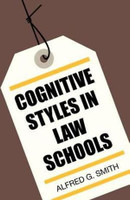
Cognitive Styles in Law Schools

Alfred G. Smith

No reviews yet Write a Review
Paperback / softback
200 Pages
$50.00
Ships in 3-5 business days
Hurry up! Current stock:

People differ in their cognitive styles-their ways of getting and using information to solve problems and make decisions. Alfred G. Smith and his associates studied these differences in a selected group of over 800 students at a score of law schools throughout the United States. Two major cognitive styles were identified: that of the monopath, who follows a single route of established principles and procedures, and that of the polypath, who takes many routes, as circumstances suggest.

A battery of both original and standard tests was administered to both law students and their professors to investigate differences in cognitive style and their relationships to self-image, anxiety, and academic achievement. This also revealed differences in prevailing styles at different schools.


The results will be of special interest to readers concerned with legal education, to psychologists, and to behavioral scientists. The research format developed here will serve equally well for raising significant questions about the professions of medicine, education, social work, and others in which cognitive and communication styles play a central role in determining outcomes.

"

This product hasn't received any reviews yet. Be the first to review this product!

$50.00
Ships in 3-5 business days
Hurry up! Current stock:

Cognitive Styles in Law Schools

$50.00

Description

People differ in their cognitive styles-their ways of getting and using information to solve problems and make decisions. Alfred G. Smith and his associates studied these differences in a selected group of over 800 students at a score of law schools throughout the United States. Two major cognitive styles were identified: that of the monopath, who follows a single route of established principles and procedures, and that of the polypath, who takes many routes, as circumstances suggest.

A battery of both original and standard tests was administered to both law students and their professors to investigate differences in cognitive style and their relationships to self-image, anxiety, and academic achievement. This also revealed differences in prevailing styles at different schools.


The results will be of special interest to readers concerned with legal education, to psychologists, and to behavioral scientists. The research format developed here will serve equally well for raising significant questions about the professions of medicine, education, social work, and others in which cognitive and communication styles play a central role in determining outcomes.

"

Customers Also Viewed