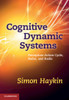
Recent work in cognitive science, much of it placed in opposition to a computational view of the mind, has argued that the concept of representation and theories based on that concept are not sufficient to explain the details of cognitive processing. These attacks on representation have focused on the importance of context sensitivity in cognitive processing, on the range of individual differences in performance, and on the relationship between minds and the bodies and environments in which they exist. In each case, models based on traditional assumptions about representation have been assumed to be too rigid to account for the effects of these factors on cognitive processing. In place of a representational view of mind, other formalisms and methodologies, such as nonlinear differential equations (or dynamical systems) and situated robotics, have been proposed as better explanatory tools for understanding cognition. This book is based on the notion that, while new tools and approaches for understanding cognition are valuable, representational approaches do not need to be abandoned in the course of constructing new models and explanations. Rather, models that incorporate representation are quite compatible with the kinds of complex situations being modeled with the new methods. This volume illustrates the power of this explicitly representational approach--labeled "cognitive dynamics"--in original essays by prominent researchers in cognitive science. Each chapter explores some aspect of the dynamics of cognitive processing while still retaining representations as the centerpiece of the explanations of the key phenomena. These chapters serve as an existence proof that representation is not incompatible with the dynamics of cognitive processing. The book is divided into sections on foundational issues about the use of representation in cognitive science, the dynamics of low level cognitive processes (such as visual and auditory perception and simple lexical priming), and the dynamics of higher cognitive processes (including categorization, analogy, and decision making).
Recent work in cognitive science, much of it placed in opposition to a computational view of the mind, has argued that the concept of representation and theories based on that concept are not sufficient to explain the details of cognitive processing. These attacks on representation have focused on the importance of context sensitivity in cognitive processing, on the range of individual differences in performance, and on the relationship between minds and the bodies and environments in which they exist. In each case, models based on traditional assumptions about representation have been assumed to be too rigid to account for the effects of these factors on cognitive processing. In place of a representational view of mind, other formalisms and methodologies, such as nonlinear differential equations (or dynamical systems) and situated robotics, have been proposed as better explanatory tools for understanding cognition. This book is based on the notion that, while new tools and approaches for understanding cognition are valuable, representational approaches do not need to be abandoned in the course of constructing new models and explanations. Rather, models that incorporate representation are quite compatible with the kinds of complex situations being modeled with the new methods. This volume illustrates the power of this explicitly representational approach--labeled "cognitive dynamics"--in original essays by prominent researchers in cognitive science. Each chapter explores some aspect of the dynamics of cognitive processing while still retaining representations as the centerpiece of the explanations of the key phenomena. These chapters serve as an existence proof that representation is not incompatible with the dynamics of cognitive processing. The book is divided into sections on foundational issues about the use of representation in cognitive science, the dynamics of low level cognitive processes (such as visual and auditory perception and simple lexical priming), and the dynamics of higher cognitive processes (including categorization, analogy, and decision making).
This book explores the application of dynamical theory to cognitive science. Giunti shows how the dynamical approach can illuminate problems of cognition, information processing, consciousness,...
The conference from which this book derives took place in Tsukuba, Japan in March 2004. The fifth in a continuing series of conferences, this one was organized to examine dynamic processes in "lower...
A groundbreaking, unifying theory of computer science for low-cost, high-quality softwareThe Cognitive Dynamics of Computer Science represents the culmination of more than thirty years of the...
Discover your next great read at BookLoop, Australiand online bookstore offering a vast selection of titles across various genres and interests. Whether you're curious about what's trending or searching for graphic novels that captivate, thrilling crime and mystery fiction, or exhilarating action and adventure stories, our curated collections have something for every reader. Delve into imaginative fantasy worlds or explore the realms of science fiction that challenge the boundaries of reality. Fans of contemporary narratives will find compelling stories in our contemporary fiction section. Embark on epic journeys with our fantasy and science fiction titles,
Shop Trending Books and New Releases
Explore our new releases for the most recent additions in romance books, fantasy books, graphic novels, crime and mystery books, science fiction books as well as biographies, cookbooks, self help books, tarot cards, fortunetelling and much more. With titles covering current trends, booktok and bookstagram recommendations, and emerging authors, BookLoop remains your go-to local australian bookstore for buying books online across all book genres.
Shop Best Books By Collection
Stay updated with the literary world by browsing our trending books, featuring the latest bestsellers and critically acclaimed works. Explore titles from popular brands like Minecraft, Pokemon, Star Wars, Bluey, Lonely Planet, ABIA award winners, Peppa Pig, and our specialised collection of ADHD books. At BookLoop, we are committed to providing a diverse and enriching reading experience for all.
Sign In
your cart
Your cart is empty
Menu
Search
PRE-SALES
If you have any questions before making a purchase chat with our online operators to get more information.