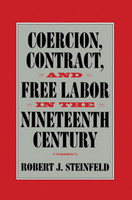
Coercion, Contract, and Free Labor in the Nineteenth Century
This book presents a fundamental reassessment of the nature of wage labor in the nineteenth century, focusing on the common use of penal sanctions in England to enforce wage labor agreements. Professor Steinfeld argues that wage workers were not employees at will but were often bound to their employment by enforceable labor agreements, which employers used whenever available to manage their labor costs and supply. In the northern United States, where employers normally could not use penal sanctions, the common law made other contract remedies available, also placing employers in a position to enforce labor agreements. Modern free wage labor only came into being late in the nineteenth century, as a result of reform legislation that restricted the contract remedies employers could legally use.
This book by David K. O'Rourke presents a study of language and linguistic forms and the roles they played in the initial imagining, developing, and maintaining of a society based on coerced labor...
This book has been considered by academicians and scholars of great significance and value to literature. This forms a part of the knowledge base for future generations. We have represented this book...