The Old Testament Torah and Prophets recount the history of an Israel understanding the essence of each person to be the sum of its interactive thus essence-creating social roles, such as citizen, parent, or employee. In contrast, the European world had developed a culture described by Plato as emanating from the logos but actually directed from its upper class. Each individual was to fill its logos-determined place in the social order, in contrast to Israel's God delegating responsibility to the human community (Genesis 1:27) for itself continuously creating its interactive social structure, its culture.In 325 BCE Greece colonized the Near East and pressured the Jewish leaders to reinterpret their scriptures as static rules from above rather than interactive resource for learning from past experience. The Jewish reformer Jesus of Nazareth urged the people to maintain their interactive tradition, which caused his elimination by the colonial authorities. The New Testament recounting of this restorative movement puts its current issues in creative internal interaction with Old Testament-described events on average more frequently than once every two New Testament verses.However, neo-Platonic Christian theologians Augustine, Aquinas, Luther, Tillich, and Rahner misunderstood the Old Testament and Jesus' embrace of it, and nineteenth- and twentieth-century theologians Schleiermacher, Harnack, and Bultmann explicitly rejected it. In the 1960s, scholars Eichrodt and von Rad rediscovered the Old Testament-proclaimed bilateral internal interaction between God and the community. And by the late twentieth century, Europeans Metz and Chauvet and Latin-Americans Gutierrez and Segundo offered a thoroughly interactive Christian theology.Can European and North American Christianity understand its New Testament? Before 1832 peasants could, theologians couldn't. After 1832 some theologians can, most middle-class consumers can't, most politicians don't want to, while most Africans and mestizo Latin-Americans implicitly always did.
The Old Testament Torah and Prophets recount the history of an Israel understanding the essence of each person to be the sum of its interactive thus essence-creating social roles, such as citizen, parent, or employee. In contrast, the European world had developed a culture described by Plato as emanating from the logos but actually directed from its upper class. Each individual was to fill its logos-determined place in the social order, in contrast to Israel's God delegating responsibility to the human community (Genesis 1:27) for itself continuously creating its interactive social structure, its culture.In 325 BCE Greece colonized the Near East and pressured the Jewish leaders to reinterpret their scriptures as static rules from above rather than interactive resource for learning from past experience. The Jewish reformer Jesus of Nazareth urged the people to maintain their interactive tradition, which caused his elimination by the colonial authorities. The New Testament recounting of this restorative movement puts its current issues in creative internal interaction with Old Testament-described events on average more frequently than once every two New Testament verses.However, neo-Platonic Christian theologians Augustine, Aquinas, Luther, Tillich, and Rahner misunderstood the Old Testament and Jesus' embrace of it, and nineteenth- and twentieth-century theologians Schleiermacher, Harnack, and Bultmann explicitly rejected it. In the 1960s, scholars Eichrodt and von Rad rediscovered the Old Testament-proclaimed bilateral internal interaction between God and the community. And by the late twentieth century, Europeans Metz and Chauvet and Latin-Americans Gutierrez and Segundo offered a thoroughly interactive Christian theology.Can European and North American Christianity understand its New Testament? Before 1832 peasants could, theologians couldn't. After 1832 some theologians can, most middle-class consumers can't, most politicians don't want to, while most Africans and mestizo Latin-Americans implicitly always did.
Is the "Old" Testament for today? Yes! Discover the unifying theme of the "Old" and "New" Testaments-and of history!-in God's promise-plan first given to Abraham in Genesis 12. Cross-cultural workers...
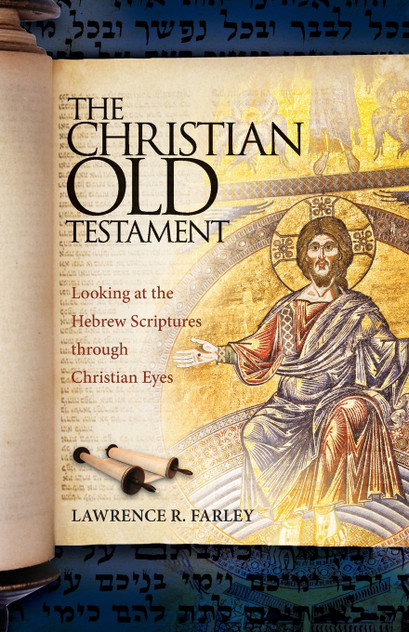
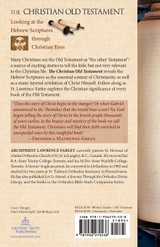
Many Christians see the Old Testament as “the other Testament”: a source of exciting stories to tell the kids, but not very relevant to the Christian life. The Christian Old Testament reveals the...
The Old Testament and its Contents is an unchanged, high-quality reprint of the original edition of 1899.Hansebooks is editor of the literature on different topic areas such as research and science,...
Discover your next great read at BookLoop, Australiand online bookstore offering a vast selection of titles across various genres and interests. Whether you're curious about what's trending or searching for graphic novels that captivate, thrilling crime and mystery fiction, or exhilarating action and adventure stories, our curated collections have something for every reader. Delve into imaginative fantasy worlds or explore the realms of science fiction that challenge the boundaries of reality. Fans of contemporary narratives will find compelling stories in our contemporary fiction section. Embark on epic journeys with our fantasy and science fiction titles,
Shop Trending Books and New Releases
Explore our new releases for the most recent additions in romance books, fantasy books, graphic novels, crime and mystery books, science fiction books as well as biographies, cookbooks, self help books, tarot cards, fortunetelling and much more. With titles covering current trends, booktok and bookstagram recommendations, and emerging authors, BookLoop remains your go-to local australian bookstore for buying books online across all book genres.
Shop Best Books By Collection
Stay updated with the literary world by browsing our trending books, featuring the latest bestsellers and critically acclaimed works. Explore titles from popular brands like Minecraft, Pokemon, Star Wars, Bluey, Lonely Planet, ABIA award winners, Peppa Pig, and our specialised collection of ADHD books. At BookLoop, we are committed to providing a diverse and enriching reading experience for all.
Sign In
your cart
Your cart is empty
Menu
Search
PRE-SALES
If you have any questions before making a purchase chat with our online operators to get more information.