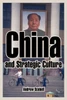
China has been identified as a looming strategic threat. Considerable attention has been given to China's assertive rhetoric and militant behavior. The author uses the rubric of strategic culture to assess China's strategic disposition. Two dimensions are examined: the nature and impact of China's assessment of its own strategic culture, and the nature and impact of China's depictions of the strategic cultures of Japan and the United States.Beijing has been depicted as increasingly belligerent over the past decade, a perception in direct conflict with earlier images of China. Ancient China is usually portrayed as possessing a weak martial tradition, a cultural predisposition to seek nonviolent solutions to problems of statecraft, and a defensive-mindedness, favoring sturdy fortifications over expansionism and invasion.The author contends that existing depictions of China's strategic culture are flawed. China's strategic disposition cannot accurately be characterized as either pacifist or bellicose. Rather, the country has a dualistic strategic culture. The two main strands are a Confucian-Mencian one that is conflict averse and defensive minded; and a Realpolitik one which favors military solutions and is offensive oriented. Both strands are operative and both influence and combine in dialectic fashion to form a "Chinese Cult of Defense." This cult paradoxically tends to dispose Chinese leaders to pursue offensive military operations as a primary alternative in pursuit of national goals, while rationalizing these actions as being purely defensive and last resort. This dualistic strategic culture has been a constant, and China has not become more bellicose or aggressive in recent years except to the extent that the warfighting capabilities of the People's Liberation Army have improved or that military doctrine has changed.The author also examines China's images of Japanese and American strategic cultures. Significantly, Chinese strategists tend to depict China's own strategic culture in very positive terms and contrast it with what are seen as the very negative images of Japan and the United States. As viewed from Chinese eyes, Japan possesses an extremely warped, violent, and militaristic strategic culture; while the United States possesses an expansionist, offensive-minded, conflict-prone strategic culture that is obsessed with technology. The author concludes by outlining a number of important recommendations for U. S. defense policy.
China has been identified as a looming strategic threat. Considerable attention has been given to China's assertive rhetoric and militant behavior. The author uses the rubric of strategic culture to assess China's strategic disposition. Two dimensions are examined: the nature and impact of China's assessment of its own strategic culture, and the nature and impact of China's depictions of the strategic cultures of Japan and the United States.Beijing has been depicted as increasingly belligerent over the past decade, a perception in direct conflict with earlier images of China. Ancient China is usually portrayed as possessing a weak martial tradition, a cultural predisposition to seek nonviolent solutions to problems of statecraft, and a defensive-mindedness, favoring sturdy fortifications over expansionism and invasion.The author contends that existing depictions of China's strategic culture are flawed. China's strategic disposition cannot accurately be characterized as either pacifist or bellicose. Rather, the country has a dualistic strategic culture. The two main strands are a Confucian-Mencian one that is conflict averse and defensive minded; and a Realpolitik one which favors military solutions and is offensive oriented. Both strands are operative and both influence and combine in dialectic fashion to form a "Chinese Cult of Defense." This cult paradoxically tends to dispose Chinese leaders to pursue offensive military operations as a primary alternative in pursuit of national goals, while rationalizing these actions as being purely defensive and last resort. This dualistic strategic culture has been a constant, and China has not become more bellicose or aggressive in recent years except to the extent that the warfighting capabilities of the People's Liberation Army have improved or that military doctrine has changed.The author also examines China's images of Japanese and American strategic cultures. Significantly, Chinese strategists tend to depict China's own strategic culture in very positive terms and contrast it with what are seen as the very negative images of Japan and the United States. As viewed from Chinese eyes, Japan possesses an extremely warped, violent, and militaristic strategic culture; while the United States possesses an expansionist, offensive-minded, conflict-prone strategic culture that is obsessed with technology. The author concludes by outlining a number of important recommendations for U. S. defense policy.
This book recounts why and how China built a nuclear submarine fleet and the impact of the effort on politics, technology, industry, and strategy. China expanded the scientific and industrial system...
The People's Republic of China is the world's most populous state and largest consumer of energy, having demonstrated momentous progress on an unprecedented scale. This global power has increasingly...
This title will explore China's strategic interests in the South China Sea, with a specific emphasis on power projection and resource security. China's regional actions and reactions are...
Discover your next great read at BookLoop, Australiand online bookstore offering a vast selection of titles across various genres and interests. Whether you're curious about what's trending or searching for graphic novels that captivate, thrilling crime and mystery fiction, or exhilarating action and adventure stories, our curated collections have something for every reader. Delve into imaginative fantasy worlds or explore the realms of science fiction that challenge the boundaries of reality. Fans of contemporary narratives will find compelling stories in our contemporary fiction section. Embark on epic journeys with our fantasy and science fiction titles,
Shop Trending Books and New Releases
Explore our new releases for the most recent additions in romance books, fantasy books, graphic novels, crime and mystery books, science fiction books as well as biographies, cookbooks, self help books, tarot cards, fortunetelling and much more. With titles covering current trends, booktok and bookstagram recommendations, and emerging authors, BookLoop remains your go-to local australian bookstore for buying books online across all book genres.
Shop Best Books By Collection
Stay updated with the literary world by browsing our trending books, featuring the latest bestsellers and critically acclaimed works. Explore titles from popular brands like Minecraft, Pokemon, Star Wars, Bluey, Lonely Planet, ABIA award winners, Peppa Pig, and our specialised collection of ADHD books. At BookLoop, we are committed to providing a diverse and enriching reading experience for all.
Sign In
your cart
Your cart is empty
Menu
Search
PRE-SALES
If you have any questions before making a purchase chat with our online operators to get more information.