Trending Bestseller

Chaucer, Boccaccio, and the Debate of Love

No reviews yet Write a Review
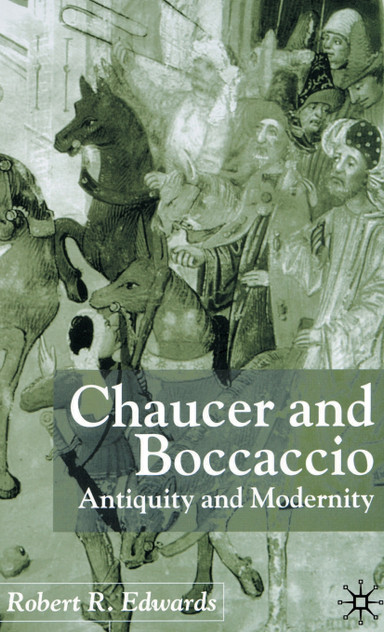
This is the first ever major study to explore links between the two most popular collections of medieval narrative. By examining the Decameron and the Canterbury Tales as a whole, the author reveals many surprising similarities which have hitherto remained unnoticed, from the way they discuss fiction to their treatment of it.
Hardback
01-September-1996
RRP: $407.00
$382.00
Ships in 3-5 business days
Hurry up! Current stock:
AlthoughThe Decameron and The Canterbury Tales have often been linked, this is the first ever major study of the two most popular collections of medieval framed narratives to examine them both beyond shared general similarities and also to look at the search for individual analogue or source material, which has proved so inconclusive. Thus, the present study examines the texts and their internal dynamics primarily as a whole and reveals many surprising similarities which have hitherto remained unnoticed. The two collections are examined in the light of their literary diversity, their shape as a form of quodlibet debate, their discussion of literature and its autonomy using the oppositions of utile diletto and 'sentence' 'solaas', and the specific way that individual narratives are treated so as to create a labyrinthine web for the reader to both negotiate and enjoy.

This product hasn't received any reviews yet. Be the first to review this product!

RRP: $407.00
$382.00
Ships in 3-5 business days
Hurry up! Current stock:

Chaucer, Boccaccio, and the Debate of Love

RRP: $407.00
$382.00

Description

AlthoughThe Decameron and The Canterbury Tales have often been linked, this is the first ever major study of the two most popular collections of medieval framed narratives to examine them both beyond shared general similarities and also to look at the search for individual analogue or source material, which has proved so inconclusive. Thus, the present study examines the texts and their internal dynamics primarily as a whole and reveals many surprising similarities which have hitherto remained unnoticed. The two collections are examined in the light of their literary diversity, their shape as a form of quodlibet debate, their discussion of literature and its autonomy using the oppositions of utile diletto and 'sentence' 'solaas', and the specific way that individual narratives are treated so as to create a labyrinthine web for the reader to both negotiate and enjoy.

Customers Also Viewed