I wrote this book because I wanted to learn more about interstel lar flight. Not the Star Trek notion of tearing around the Galaxy in a huge spaceship-that was obviously beyond existing tech nology-but a more realistic mission. In 1989 I had videotaped Voyager 2's encounter with Neptune and watched the drama of robotic exploration over and over again. I started to wonder whether we could do something similar with Alpha Centauri, the nearest star to the Sun. Everyone seemed to agree that manned flight to the stars was out of the question, if not permanently then for the indefinitely foreseeable future. But surely we could do something with robotics. And if we could figure out a theoretical way to do it, how far were we from the actual technology that would make it happen? In other words, what was the state of our interstellar technology today, those concepts and systems that might translate into a Voyager to the stars? Finding answers meant talking to people inside and outside of NASA. I was surprised to learn that there is a large literature of interstellar flight. Nobody knows for sure how to propel a space craft fast enough to make the interstellar crossing within a time scale that would fit the conventional idea of a mission, but there are candidate systems that are under active investigation. Some of this effort begins with small systems that we'll use near the Earth and later hope to extend to deep space missions.
I wrote this book because I wanted to learn more about interstel lar flight. Not the Star Trek notion of tearing around the Galaxy in a huge spaceship-that was obviously beyond existing tech nology-but a more realistic mission. In 1989 I had videotaped Voyager 2's encounter with Neptune and watched the drama of robotic exploration over and over again. I started to wonder whether we could do something similar with Alpha Centauri, the nearest star to the Sun. Everyone seemed to agree that manned flight to the stars was out of the question, if not permanently then for the indefinitely foreseeable future. But surely we could do something with robotics. And if we could figure out a theoretical way to do it, how far were we from the actual technology that would make it happen? In other words, what was the state of our interstellar technology today, those concepts and systems that might translate into a Voyager to the stars? Finding answers meant talking to people inside and outside of NASA. I was surprised to learn that there is a large literature of interstellar flight. Nobody knows for sure how to propel a space craft fast enough to make the interstellar crossing within a time scale that would fit the conventional idea of a mission, but there are candidate systems that are under active investigation. Some of this effort begins with small systems that we'll use near the Earth and later hope to extend to deep space missions.
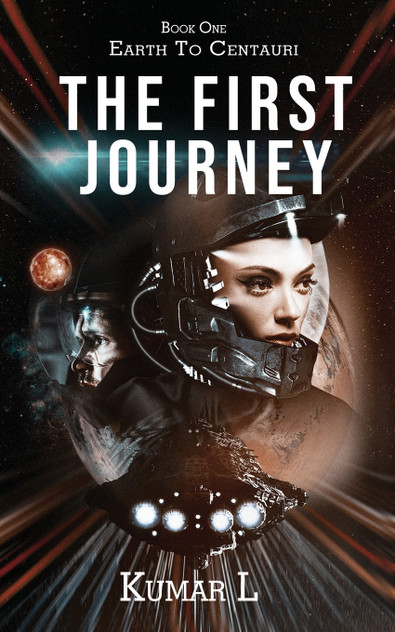
In a future age of Inter-Planetary travel new world's and alien races are awaiting discovery and a decision must be made. Who will be the first Inter-Stellar explorers to make alien contact? ...
A 140-year-old secret throws three planets into chaos! Tech for the geek. Thrills for the action seeker. Mysteries for the detective. Science for the uninitiated. The year is 2095. Voyager 1 launched...
When the crew of the USS Anderson first landed on Sawyers World, at Alpha Centauri, they found a strangely regular, tree-covered hill that could as easily have been a pyramid as an old volcanic plug...
This work has been selected by scholars as being culturally important, and is part of the knowledge base of civilization as we know it.This work is in the "public domain in the United States of...
Discover your next great read at BookLoop, Australiand online bookstore offering a vast selection of titles across various genres and interests. Whether you're curious about what's trending or searching for graphic novels that captivate, thrilling crime and mystery fiction, or exhilarating action and adventure stories, our curated collections have something for every reader. Delve into imaginative fantasy worlds or explore the realms of science fiction that challenge the boundaries of reality. Fans of contemporary narratives will find compelling stories in our contemporary fiction section. Embark on epic journeys with our fantasy and science fiction titles,
Shop Trending Books and New Releases
Explore our new releases for the most recent additions in romance books, fantasy books, graphic novels, crime and mystery books, science fiction books as well as biographies, cookbooks, self help books, tarot cards, fortunetelling and much more. With titles covering current trends, booktok and bookstagram recommendations, and emerging authors, BookLoop remains your go-to local australian bookstore for buying books online across all book genres.
Shop Best Books By Collection
Stay updated with the literary world by browsing our trending books, featuring the latest bestsellers and critically acclaimed works. Explore titles from popular brands like Minecraft, Pokemon, Star Wars, Bluey, Lonely Planet, ABIA award winners, Peppa Pig, and our specialised collection of ADHD books. At BookLoop, we are committed to providing a diverse and enriching reading experience for all.
Sign In
your cart
Your cart is empty
Menu
Search
PRE-SALES
If you have any questions before making a purchase chat with our online operators to get more information.