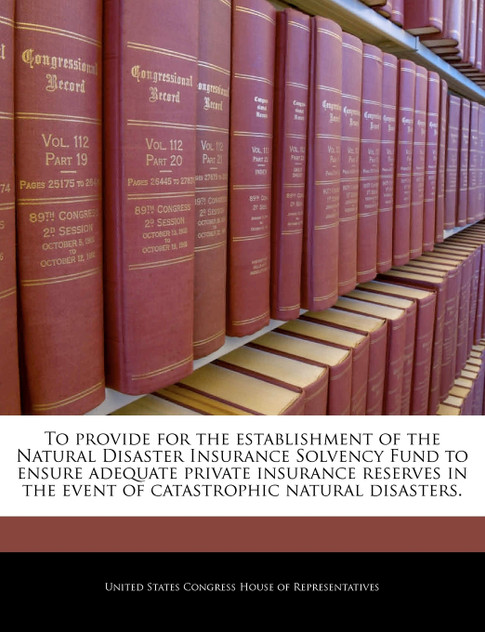
1. THE PROBLEM OF CATASTROPHE RISK The risk of large losses from natural disasters in the U.S. has significantly increased in recent years, straining private insurance markets and creating troublesome problems for disaster-prone areas. The threat of mega-catastrophes resulting from intense hurricanes or earthquakes striking major population centers has dramatically altered the insurance environment. Estimates of probable maximum losses (PMLs) to insurers from a mega catastrophe striking the U.S. range up to $100 billion depending on the location and intensity of the event (Applied Insurance Research, 2001).1 A severe disaster could have a significant financial impact on the industry (Cummins, Doherty, and Lo, 2002; Insurance Services Office, 1996a). Estimates of industry gross losses from the terrorist attack on September 11, 2001 range from $30 billion to $50 billion, and the attack's effect on insurance markets underscores the need to understand the dynamics of the supply of and the demand for insurance against extreme events, including natural disasters. Increased catastrophe risk poses difficult challenges for insurers, reinsurers, property owners and public officials (Kleindorfer and Kunreuther, 1999). The fundamental dilemma concerns insurers' ability to handle low-probability, high-consequence (LPHC) events, which generates a host of interrelated issues with respect to how the risk of such events are 1 These probable maximum loss (PML) estimates are based on a SOD-year "return" period.
1. THE PROBLEM OF CATASTROPHE RISK The risk of large losses from natural disasters in the U.S. has significantly increased in recent years, straining private insurance markets and creating troublesome problems for disaster-prone areas. The threat of mega-catastrophes resulting from intense hurricanes or earthquakes striking major population centers has dramatically altered the insurance environment. Estimates of probable maximum losses (PMLs) to insurers from a mega catastrophe striking the U.S. range up to $100 billion depending on the location and intensity of the event (Applied Insurance Research, 2001).1 A severe disaster could have a significant financial impact on the industry (Cummins, Doherty, and Lo, 2002; Insurance Services Office, 1996a). Estimates of industry gross losses from the terrorist attack on September 11, 2001 range from $30 billion to $50 billion, and the attack's effect on insurance markets underscores the need to understand the dynamics of the supply of and the demand for insurance against extreme events, including natural disasters. Increased catastrophe risk poses difficult challenges for insurers, reinsurers, property owners and public officials (Kleindorfer and Kunreuther, 1999). The fundamental dilemma concerns insurers' ability to handle low-probability, high-consequence (LPHC) events, which generates a host of interrelated issues with respect to how the risk of such events are 1 These probable maximum loss (PML) estimates are based on a SOD-year "return" period.
The BiblioGov Project is an effort to expand awareness of the public documents and records of the U.S. Government via print publications. In broadening the public understanding of government and its...
The BiblioGov Project is an effort to expand awareness of the public documents and records of the U.S. Government via print publications. In broadening the public understanding of government and its...
The BiblioGov Project is an effort to expand awareness of the public documents and records of the U.S. Government via print publications. In broadening the public understanding of government and its...
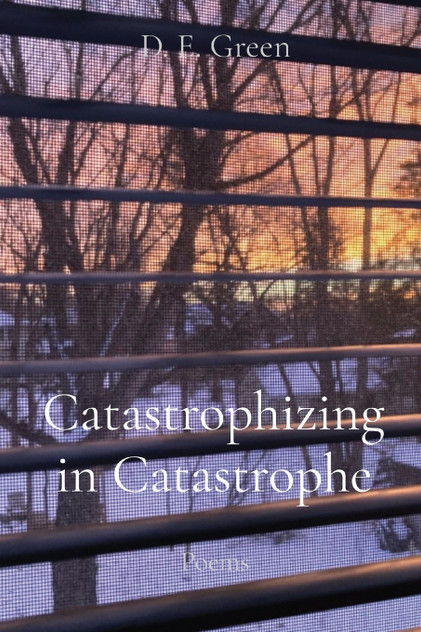
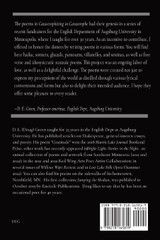
The poems in Catastrophizing in Catastrophe had their genesis in a series of recent fundraisers for the English Department of Augsburg University in Minneapolis, where I taught for over 30 years. As...
The BiblioGov Project is an effort to expand awareness of the public documents and records of the U.S. Government via print publications. In broadening the public understanding of government and its...
Discover your next great read at BookLoop, Australiand online bookstore offering a vast selection of titles across various genres and interests. Whether you're curious about what's trending or searching for graphic novels that captivate, thrilling crime and mystery fiction, or exhilarating action and adventure stories, our curated collections have something for every reader. Delve into imaginative fantasy worlds or explore the realms of science fiction that challenge the boundaries of reality. Fans of contemporary narratives will find compelling stories in our contemporary fiction section. Embark on epic journeys with our fantasy and science fiction titles,
Shop Trending Books and New Releases
Explore our new releases for the most recent additions in romance books, fantasy books, graphic novels, crime and mystery books, science fiction books as well as biographies, cookbooks, self help books, tarot cards, fortunetelling and much more. With titles covering current trends, booktok and bookstagram recommendations, and emerging authors, BookLoop remains your go-to local australian bookstore for buying books online across all book genres.
Shop Best Books By Collection
Stay updated with the literary world by browsing our trending books, featuring the latest bestsellers and critically acclaimed works. Explore titles from popular brands like Minecraft, Pokemon, Star Wars, Bluey, Lonely Planet, ABIA award winners, Peppa Pig, and our specialised collection of ADHD books. At BookLoop, we are committed to providing a diverse and enriching reading experience for all.
Sign In
your cart
Your cart is empty
Menu
Search
PRE-SALES
If you have any questions before making a purchase chat with our online operators to get more information.