
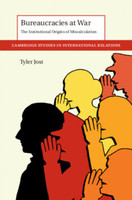
Why do states start conflicts they ultimately lose? Why do leaders possess inaccurate expectations of their prospects for victory? Bureaucracies at War examines how national security institutions shape the quality of bureaucratic information upon which leaders base their choice for conflict - which institutional designs provide the best counsel, why those institutions perform better, and why many leaders fail to adopt them. Jost argues that the same institutions that provide the best information also empower the bureaucracy to punish the leader. Thus, miscalculation on the road to war is often the tragic consequence of how leaders resolve the trade-off between good information and political security. Employing an original cross-national data set and detailed explorations of the origins and consequences of institutions inside China, India, Pakistan, and the United States, this book explores why bureaucracy helps to avoid disaster, how bureaucratic competition produces better information, and why institutional design is fundamentally political.
Bureaucracy At War U.S. Performance In The Vietnam Conflict is an encyclopaedic analysis of many issues raised in the course of the Vietnam War. Komer questions the presence of the U.S in South-east...
Some people in powerful positions will wake up to an apocalyptic epiphany and relentlessly pursue the outcome no matter who and what stand in their way. They will walk away after the fact and never...
The readings in this collection provide a comprehensive guide to the established knowledge and emerging issues regarding democratizing public bureaucracies by making them socially representative. The...