Trending Bestseller

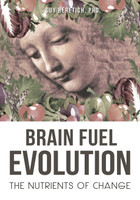
Brain Fuel Evolution

The Nutrients of Change

Guy Beretich

No reviews yet Write a Review
Paperback / softback
10 March 2016
$47.00
Ships in 3-5 business days
Hurry up! Current stock:

We've learned a lot about the brain: which nutrients are required to make neurotransmitters, which nutrient deficiencies cause depression, and even which nutrients improve memory and intelligence. Wouldn't it make sense, then, to eat "brain foods" that are high in these "brain fuel" nutrients? Fortunately, the USDA recently analyzed several thousand foods for their nutrient contents, so we now know what these brain foods are and can add them to our diet. That's the practical side of this research. The "cool" side is that, in looking back through human history, we discover that major advances in civilization often occurred after new brain foods came into the diet, during the Axial Age, Ancient Greece, the Renaissance, the Elizabethan Era and 19th century France, to name a few. We also see that, in the cases where the brain foods were removed from the diet, the civilizations began to deteriorate shortly thereafter. We can even go back to Paleolithic times and explain the transition from archaic to modern man using simply the concepts of brain fuels and brain foods. These historical "case studies" underscore the necessity of brain foods in human evolution.


Nutrients are the fundamental fuel for the brain, but delivering them to the body is an art. If culture is king, then cuisine is queen. Nonetheless, it has been mainly serendipity that has been responsible for these improved cuisines. Multiple factors, including geography, technology and even politics, have time and again led randomly to an improved mix of brain fuels.


We judge civilizations in many ways. One way is to look at the visual arts and assess the technical expertise and the artistic expression represented there. Looking within civilizations we see large changes in one or both of these features after a major increase in brain food availability, as well as major advances in philosophy, literature and other arts. The study of science (natural philosophy) can trace its roots to the serendipitous confluence of all the brain fuels in abundant supply in Ancient Greece.


The times and places examined here include the first civilizations (Ancient Egypt, Indus Valley Civilization, Mesoamerica, and Inca Empire), the Pan-Asian Awakening in the 6th Century BC (a few decades of the Axial Age), the three eras with the most abundant brain fuels (Ancient Greece, Renaissance Tuscany and 19th Century France), and places where a partial abundance of brain fuels resulted in advancements in specific fields (Elizabethan England, Dutch Golden Age, Scottish Enlightenment). There are also specific examples of civilizations where brain fuels were intentionally restricted to create aggression in warfare (Roman legions and Mongol horsemen).


Currently on the scene there are several popular modern diets (e.g. Atkins, Paleo, Mediterranean), and an analysis of these shows that, while they all express some fundamental tenets that improve the level of brain fuel nutrients, each one exhibits a deficit in one or more of them. We consider these diets from a brain fuels perspective and discuss how to adapt them in an easy and sustainable manner to maximize mental performance.

This product hasn't received any reviews yet. Be the first to review this product!

$47.00
Ships in 3-5 business days
Hurry up! Current stock:

Brain Fuel Evolution

$47.00

Description

We've learned a lot about the brain: which nutrients are required to make neurotransmitters, which nutrient deficiencies cause depression, and even which nutrients improve memory and intelligence. Wouldn't it make sense, then, to eat "brain foods" that are high in these "brain fuel" nutrients? Fortunately, the USDA recently analyzed several thousand foods for their nutrient contents, so we now know what these brain foods are and can add them to our diet. That's the practical side of this research. The "cool" side is that, in looking back through human history, we discover that major advances in civilization often occurred after new brain foods came into the diet, during the Axial Age, Ancient Greece, the Renaissance, the Elizabethan Era and 19th century France, to name a few. We also see that, in the cases where the brain foods were removed from the diet, the civilizations began to deteriorate shortly thereafter. We can even go back to Paleolithic times and explain the transition from archaic to modern man using simply the concepts of brain fuels and brain foods. These historical "case studies" underscore the necessity of brain foods in human evolution.


Nutrients are the fundamental fuel for the brain, but delivering them to the body is an art. If culture is king, then cuisine is queen. Nonetheless, it has been mainly serendipity that has been responsible for these improved cuisines. Multiple factors, including geography, technology and even politics, have time and again led randomly to an improved mix of brain fuels.


We judge civilizations in many ways. One way is to look at the visual arts and assess the technical expertise and the artistic expression represented there. Looking within civilizations we see large changes in one or both of these features after a major increase in brain food availability, as well as major advances in philosophy, literature and other arts. The study of science (natural philosophy) can trace its roots to the serendipitous confluence of all the brain fuels in abundant supply in Ancient Greece.


The times and places examined here include the first civilizations (Ancient Egypt, Indus Valley Civilization, Mesoamerica, and Inca Empire), the Pan-Asian Awakening in the 6th Century BC (a few decades of the Axial Age), the three eras with the most abundant brain fuels (Ancient Greece, Renaissance Tuscany and 19th Century France), and places where a partial abundance of brain fuels resulted in advancements in specific fields (Elizabethan England, Dutch Golden Age, Scottish Enlightenment). There are also specific examples of civilizations where brain fuels were intentionally restricted to create aggression in warfare (Roman legions and Mongol horsemen).


Currently on the scene there are several popular modern diets (e.g. Atkins, Paleo, Mediterranean), and an analysis of these shows that, while they all express some fundamental tenets that improve the level of brain fuel nutrients, each one exhibits a deficit in one or more of them. We consider these diets from a brain fuels perspective and discuss how to adapt them in an easy and sustainable manner to maximize mental performance.

Customers Also Viewed

Buy Books Online at BookLoop

Discover your next great read at BookLoop, Australiand online bookstore offering a vast selection of titles across various genres and interests. Whether you're curious about what's trending or searching for graphic novels that captivate, thrilling crime and mystery fiction, or exhilarating action and adventure stories, our curated collections have something for every reader. Delve into imaginative fantasy worlds or explore the realms of science fiction that challenge the boundaries of reality. Fans of contemporary narratives will find compelling stories in our contemporary fiction section. Embark on epic journeys with our fantasy and science fiction titles,

Shop Trending Books and New Releases

Explore our new releases for the most recent additions in romance books, fantasy books, graphic novels, crime and mystery books, science fiction books as well as biographies, cookbooks, self help books, tarot cards, fortunetelling and much more. With titles covering current trends, booktok and bookstagram recommendations, and emerging authors, BookLoop remains your go-to local australian bookstore for buying books online across all book genres.

Shop Best Books By Collection

Stay updated with the literary world by browsing our trending books, featuring the latest bestsellers and critically acclaimed works. Explore titles from popular brands like Minecraft, Pokemon, Star Wars, Bluey, Lonely Planet, ABIA award winners, Peppa Pig, and our specialised collection of ADHD books. At BookLoop, we are committed to providing a diverse and enriching reading experience for all.