


$979.00
Ships in 3-5 business days
Blood Stem Cell Transplantation
$979.00
Description
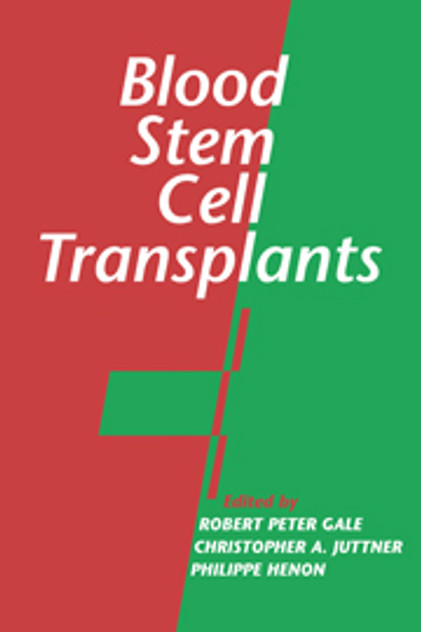
Blood Stem Cell Transplantation conveys the excitement that accompanies the newest developments in hematopoietic stem cell transplantation. Some of the applications that stand to impact this field most significantly are based on recent advances in the biological sciences, as demonstrated by the chapters on gene therapy, on the detection of minimal residual disease using molecular techniques, and on the use of radioimmunoconjugates targeting lymphoma and leukemia-associated antigens. Others are the results of clinical observations - e.g., the association between graft-versus-host- disease (GVHD) and durable remissions that have led to creative clinical experiments such as donor leukocyte infusions (DLI). Attempts to unravel the biological events that underlie the responses seen in patients with relapsed chronic myelogenous leukemia treated with DLI are likely to provide the basis for future refinements in this clinical approach. Hopefully, improved response rates and reduced toxicity will result. The power of the immunologic response in controlling malignant disease is underscored in the chapter on post-transplant immunotherapy. The complex immunologic process that results in clinical GVHD may be dissected and engineered to provide clinical benefits that include, in addition to its antineoplastic effects, the amelioration of its clinical manifestations. Better control of GVHD with less global immunosuppression will facilitate the use of mismatched and unrelated donors. This area of investigation perfectly illustrates the continued interplay between the laboratory and the clinic. The continued cross-fertilization of ideas between immunologists, molecular biologists and clinical investigators is likely to yield important advances in this field for years to come.
Possible applications of stem cell transplantation continue to grow with the identification of alternative sources of stem cells and the potential to engineer and/or expand the graft. Although the use of unrelated and mismatched donors continues to increase, the possibilities associated with umbilical cord blood transplantation are legion, especially if stem cells can be expanded ex vivo to provide grafts for full-sized adults. Using techniques in which contaminating malignant cells may be eliminated from autografts through positive selection, autologous transplantation may prove highly effective, especially when coupled with post-transplant immunotherapy. Some of these same methodologies have helped facilitate the use of autologous grafts for transplantation in patients with chronic myelogenous leukemia without allogeneic donors.
Advances in the supportive care of transplant patients, including the pretransplant identification of those at risk from pulmonary complications and the use of cytokines to speed engraftment, have reduced morbidity and mortality to such a degree that it is appropriate to consider high-dose therapy and stem cell reconstitution in patients with nonmalignant diseases. The impressive advances that have occurred in transplantation for thalassemia are described by pioneers in their area of investigation. The burgeoning field of transplantation for autoimmune disorders, including its immunobiologic basis and soon-to- be-realized clinical potential, is also summarized. Continued progress in the use of high-dose therapy with stem cell rescue for the treatment of pediatric tumors, which derives in part from improved supportive care, is detailed.
Possible applications of stem cell transplantation continue to grow with the identification of alternative sources of stem cells and the potential to engineer and/or expand the graft. Although the use of unrelated and mismatched donors continues to increase, the possibilities associated with umbilical cord blood transplantation are legion, especially if stem cells can be expanded ex vivo to provide grafts for full-sized adults. Using techniques in which contaminating malignant cells may be eliminated from autografts through positive selection, autologous transplantation may prove highly effective, especially when coupled with post-transplant immunotherapy. Some of these same methodologies have helped facilitate the use of autologous grafts for transplantation in patients with chronic myelogenous leukemia without allogeneic donors.
Advances in the supportive care of transplant patients, including the pretransplant identification of those at risk from pulmonary complications and the use of cytokines to speed engraftment, have reduced morbidity and mortality to such a degree that it is appropriate to consider high-dose therapy and stem cell reconstitution in patients with nonmalignant diseases. The impressive advances that have occurred in transplantation for thalassemia are described by pioneers in their area of investigation. The burgeoning field of transplantation for autoimmune disorders, including its immunobiologic basis and soon-to- be-realized clinical potential, is also summarized. Continued progress in the use of high-dose therapy with stem cell rescue for the treatment of pediatric tumors, which derives in part from improved supportive care, is detailed.
You May Like
Stem Cell Transplantation
Organ transplantation has been the most important therapeutic advance in the last third of the 20th century. Its development has revolutionized medicine, as demonstrated by the fact that a large...
$442.00

Allogeneic Stem Cell Transplantation
Since the original publication of Allogeneic Stem Cell Transplantation: Clinical Research and Practice, Allogeneic hematopoietic stem cell transplantation (HSC) has undergone several fast-paced...
$498.00


Haploidentical Stem Cell Transplantation
This book discusses the aspects of haploidentical transplants and will shed light on the debates and questions on this burgeoning field and timely topic. Donor selection, graft failure, minimal CD34+...
$227.00
Customers Also Viewed
Buy Books Online at BookLoop
Discover your next great read at BookLoop, Australiand online bookstore offering a vast selection of titles across various genres and interests. Whether you're curious about what's trending or searching for graphic novels that captivate, thrilling crime and mystery fiction, or exhilarating action and adventure stories, our curated collections have something for every reader. Delve into imaginative fantasy worlds or explore the realms of science fiction that challenge the boundaries of reality. Fans of contemporary narratives will find compelling stories in our contemporary fiction section. Embark on epic journeys with our fantasy and science fiction titles,
Shop Trending Books and New Releases
Explore our new releases for the most recent additions in romance books, fantasy books, graphic novels, crime and mystery books, science fiction books as well as biographies, cookbooks, self help books, tarot cards, fortunetelling and much more. With titles covering current trends, booktok and bookstagram recommendations, and emerging authors, BookLoop remains your go-to local australian bookstore for buying books online across all book genres.
Shop Best Books By Collection
Stay updated with the literary world by browsing our trending books, featuring the latest bestsellers and critically acclaimed works. Explore titles from popular brands like Minecraft, Pokemon, Star Wars, Bluey, Lonely Planet, ABIA award winners, Peppa Pig, and our specialised collection of ADHD books. At BookLoop, we are committed to providing a diverse and enriching reading experience for all.