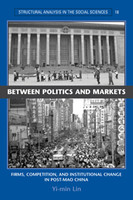
Between Politics and Markets examines how the decline of central planning in post-Mao China was related to the rise of two markets - an economic market for the exchange of products and factors, and a political market for the diversion to private interests of state assets and authorities. Lin reveals their concurrent development through an account of how industrial firms competed their way out of the plan through exchange relations with one another and with state agents. He argues that the two markets were mutually accommodating, that the political market grew also from a decay of the state's self-monitoring capacity, and that economic actors' competition for special favors from state agents constituted a major driving force of economic institutional change.
This is the first book length study of war in the thought of one of the twentieth-century's most important and original political thinkers. Hannah Arendt's writing was fundamentally rooted in her...