Trending Bestseller

Avian Urban Ecology

No reviews yet Write a Review
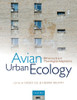
This edited volume adopts an evolutionary framework to explore how pre-existing differences in life history, behaviour, and physiology of birds may determine the course of their adaptation to urban habitats.
Paperback / softback
19-December-2013
248 Pages
$169.00
Ships in 3-5 business days
Hurry up! Current stock:
As natural habitat continues to be lost and the world becomes more urbanized, biologists are increasingly studying the effect this has on wildlife. Birds in particular are good model systems as many of their life history, behaviour, and physiology traits are intrinsically linked to measurable environmental factors, and it is relatively easy to compare urban individuals and populations to their rural counterparts. This edited volume adopts an evolutionary framework to explore how pre-existing differences between individuals and populations may determine the course of adaptations, and focuses on the evolutionary process by which adaptation to urban habitats may happen. It discusses topics such as acoustics, reproductive cues, disease, and artificial feeding, and includes some additional case studies of cutting edge research on these areas. This is an accessible text suitable for professional avian biologists and ornithologists as well as graduate students of avian ecology, evolution, and conservation. A secondary market will exist amongst a more general audience of urban ecologists and conservation biologists.

This product hasn't received any reviews yet. Be the first to review this product!

$169.00
Ships in 3-5 business days
Hurry up! Current stock:

Avian Urban Ecology

$169.00

Description

As natural habitat continues to be lost and the world becomes more urbanized, biologists are increasingly studying the effect this has on wildlife. Birds in particular are good model systems as many of their life history, behaviour, and physiology traits are intrinsically linked to measurable environmental factors, and it is relatively easy to compare urban individuals and populations to their rural counterparts. This edited volume adopts an evolutionary framework to explore how pre-existing differences between individuals and populations may determine the course of adaptations, and focuses on the evolutionary process by which adaptation to urban habitats may happen. It discusses topics such as acoustics, reproductive cues, disease, and artificial feeding, and includes some additional case studies of cutting edge research on these areas. This is an accessible text suitable for professional avian biologists and ornithologists as well as graduate students of avian ecology, evolution, and conservation. A secondary market will exist amongst a more general audience of urban ecologists and conservation biologists.

Customers Also Viewed