Distributed-memory multiprocessing systems (DMS), such as Intel's hypercubes, the Paragon, Thinking Machine's CM-5, and the Meiko Computing Surface, have rapidly gained user acceptance and promise to deliver the computing power required to solve the grand challenge problems of Science and Engineering. These machines are relatively inexpensive to build, and are potentially scalable to large numbers of processors. However, they are difficult to program: the non-uniformity of the memory which makes local accesses much faster than the transfer of non-local data via message-passing operations implies that the locality of algorithms must be exploited in order to achieve acceptable performance. The management of data, with the twin goals of both spreading the computational workload and minimizing the delays caused when a processor has to wait for non-local data, becomes of paramount importance. When a code is parallelized by hand, the programmer must distribute the program's work and data to the processors which will execute it. One of the common approaches to do so makes use of the regularity of most numerical computations. This is the so-called Single Program Multiple Data (SPMD) or data parallel model of computation. With this method, the data arrays in the original program are each distributed to the processors, establishing an ownership relation, and computations defining a data item are performed by the processors owning the data.
Distributed-memory multiprocessing systems (DMS), such as Intel's hypercubes, the Paragon, Thinking Machine's CM-5, and the Meiko Computing Surface, have rapidly gained user acceptance and promise to deliver the computing power required to solve the grand challenge problems of Science and Engineering. These machines are relatively inexpensive to build, and are potentially scalable to large numbers of processors. However, they are difficult to program: the non-uniformity of the memory which makes local accesses much faster than the transfer of non-local data via message-passing operations implies that the locality of algorithms must be exploited in order to achieve acceptable performance. The management of data, with the twin goals of both spreading the computational workload and minimizing the delays caused when a processor has to wait for non-local data, becomes of paramount importance. When a code is parallelized by hand, the programmer must distribute the program's work and data to the processors which will execute it. One of the common approaches to do so makes use of the regularity of most numerical computations. This is the so-called Single Program Multiple Data (SPMD) or data parallel model of computation. With this method, the data arrays in the original program are each distributed to the processors, establishing an ownership relation, and computations defining a data item are performed by the processors owning the data.
Readership This book is devoted to the study of compiler transformations that are needed to expose the parallelism hiddenin a program. This book is notan introductory book to parallel processing, nor...
The automatic generation of parallel code from high level sequential description is of key importance to the widespread use of high performance machine architectures. This text considers (in detail)...
Automatic Performance Prediction of Parallel Programs presents a unified approach to the problem of automatically estimating the performance of parallel computer programs. The author focuses ...
This story of the birth and infancy of the United Auto Workers, told by two participants, shows how the gains workers made were neither easy nor inevitable-not automatic-but required strategic and...
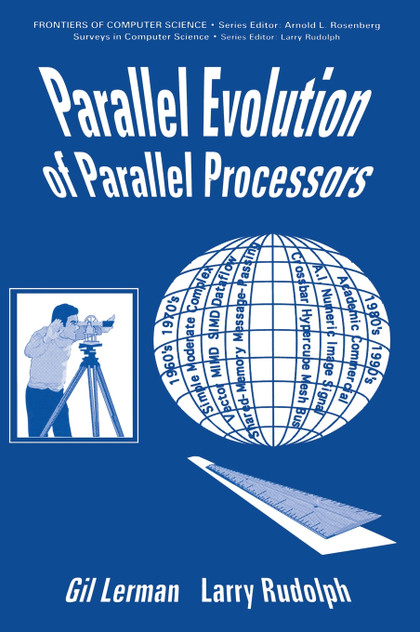
1. Introduction.- 2. Classification of Parallel Processors.- 2.1. A Brief History of Classification Schemes.- 2.2. The Classification Scheme Used in This Work.- 2.3. A Look at the Classification...
Discover your next great read at BookLoop, Australiand online bookstore offering a vast selection of titles across various genres and interests. Whether you're curious about what's trending or searching for graphic novels that captivate, thrilling crime and mystery fiction, or exhilarating action and adventure stories, our curated collections have something for every reader. Delve into imaginative fantasy worlds or explore the realms of science fiction that challenge the boundaries of reality. Fans of contemporary narratives will find compelling stories in our contemporary fiction section. Embark on epic journeys with our fantasy and science fiction titles,
Shop Trending Books and New Releases
Explore our new releases for the most recent additions in romance books, fantasy books, graphic novels, crime and mystery books, science fiction books as well as biographies, cookbooks, self help books, tarot cards, fortunetelling and much more. With titles covering current trends, booktok and bookstagram recommendations, and emerging authors, BookLoop remains your go-to local australian bookstore for buying books online across all book genres.
Shop Best Books By Collection
Stay updated with the literary world by browsing our trending books, featuring the latest bestsellers and critically acclaimed works. Explore titles from popular brands like Minecraft, Pokemon, Star Wars, Bluey, Lonely Planet, ABIA award winners, Peppa Pig, and our specialised collection of ADHD books. At BookLoop, we are committed to providing a diverse and enriching reading experience for all.
Sign In
your cart
Your cart is empty
Menu
Search
PRE-SALES
If you have any questions before making a purchase chat with our online operators to get more information.