Trending Bestseller

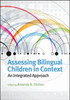
Assessing Bilingual Children in Context

No reviews yet Write a Review
This book explores the interplay between factors impacting English language learners and considers implications for assessment. It advocates for an integrated assessment of bilingual children that considers multiple influences.
Hardback
30-December-2013
$193.00
Ships in 4-6 business days
Hurry up! Current stock:
Bilingual children are often referred for assessment to determine if educational or mental health supports are necessary for academic, social-emotional, or personal success. However, practitioners unfamiliar with the complex factors affecting second language acquisition run the risk of misinterpreting assessment data. For example, assessments that purport to examine a student's cognitive or academic abilities may instead measure language proficiency or the effects of immigration or poverty. This book explores the interplay between factors impacting English language learners and considers implications for assessment. It advocates for an integrated assessment of bilingual children that considers multiple influences, such as previous education, immigration, acculturation, poverty, trauma, and even structural differences between the child's first and second languages. In line with advances in science, several chapters explore the brain-based relationships between personal experience and language learning. All chapters provide case examples of bilingual children, as well as practical checklists of factors to consider in assessing such children. In today's multicultural society, professionals working with bilingual children must consider each child's context before determining his or her needs. This book equips such professionals with the tools necessary for an integrated assessment.

This product hasn't received any reviews yet. Be the first to review this product!

$193.00
Ships in 4-6 business days
Hurry up! Current stock:

Assessing Bilingual Children in Context

$193.00

Description

Bilingual children are often referred for assessment to determine if educational or mental health supports are necessary for academic, social-emotional, or personal success. However, practitioners unfamiliar with the complex factors affecting second language acquisition run the risk of misinterpreting assessment data. For example, assessments that purport to examine a student's cognitive or academic abilities may instead measure language proficiency or the effects of immigration or poverty. This book explores the interplay between factors impacting English language learners and considers implications for assessment. It advocates for an integrated assessment of bilingual children that considers multiple influences, such as previous education, immigration, acculturation, poverty, trauma, and even structural differences between the child's first and second languages. In line with advances in science, several chapters explore the brain-based relationships between personal experience and language learning. All chapters provide case examples of bilingual children, as well as practical checklists of factors to consider in assessing such children. In today's multicultural society, professionals working with bilingual children must consider each child's context before determining his or her needs. This book equips such professionals with the tools necessary for an integrated assessment.

Customers Also Viewed